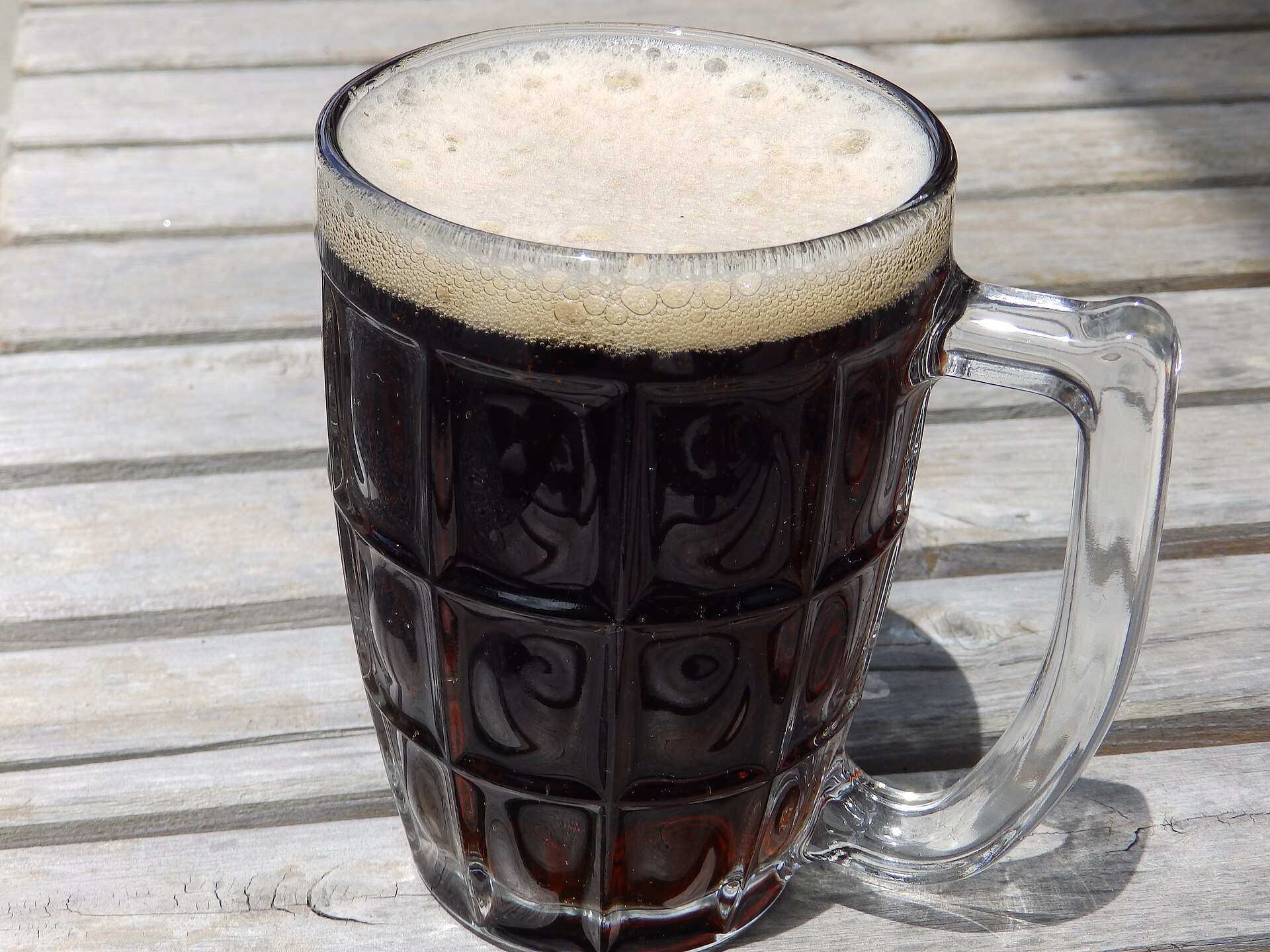
Root beer rewards measurement because the drink combines three things that punish improvisation: a large sugar load, high carbonation and strong aroma that clings to soft equipment. The safest repeatable home method is to make a non-fermented syrup-and-water base, place it in a pressure-rated keg, chill it fully and force-carbonate it from a regulated carbon-dioxide cylinder. That avoids asking live yeast to stop at exactly the point where the soda is fizzy but still sweet. It also makes every decision visible: final volume, sugar concentration, temperature, pressure, time and serving resistance.
Choose force carbonation for control
The American Homebrewers Association notes that homemade root beer fermented with yeast is prone to over-carbonation and can acquire alcohol. Those are linked problems: yeast consuming sugar produces carbon dioxide and ethanol. A sweet soda contains far more fermentable sugar than the yeast should consume, so a sealed package needs a reliable way to halt fermentation before pressure becomes dangerous. AHA: root beer and home fermentation
Force carbonation separates sweetness from gas production. Sugar stays for flavour, while a regulator supplies carbon dioxide to a rated keg at a selected temperature and pressure. The result can remain non-fermented provided yeast or other fermentative microbes are not introduced. It is still a perishable prepared beverage, so clean handling, cold storage and sensible batch size matter.
This method requires actual draft equipment: a beverage keg in good condition, a carbon-dioxide cylinder, a regulator rated for the cylinder pressure, gas and beverage disconnects, suitable tubing, a tap, refrigerator space and an appropriate cleaning and sanitising routine. Do not improvise a pressure vessel. Plastic water containers, decorative barrels and ordinary glass bottles are not substitutes for a keg with a known pressure rating and functioning relief valve.
Build the flavour from a food-grade, safrole-free starting point
Traditional sassafras root bark contains safrole. US food regulation prohibits safrole and sassafras preparations containing it for use in food, while permitting safrole-free sassafras extract. The simplest safe route is a commercial food-grade root beer extract whose label supplies a batch ratio and ingredient information. Do not forage or add untreated sassafras root bark because an old recipe calls it authentic. FDA: safrole prohibited in food
Root beer character can include wintergreen, vanilla, liquorice-like, citrus, spice and herbal notes, but extracts differ dramatically in concentration. Use the manufacturer’s starting dose for the final batch volume, then conduct a bench trial. Mix a measured 100-millilitre sample at the proposed sugar and extract ratio, chill it, taste it and scale only after the balance works. Cold temperature and carbonation will change perception, so aim slightly less sweet and less aromatic than a warm flat sample seems to demand.
If using individual botanical ingredients instead of an extract, use ingredients sold for food use and a modern tested recipe. Record mass, extraction temperature and time. Strain thoroughly and recognise that a botanical infusion adds microbial and allergen questions that a manufactured extract may handle differently. “Natural” is not a safety specification, and a strong medicinal note is usually a formulation problem rather than proof of authenticity.
Set sweetness with a number, then confirm by taste
A detailed Brew Your Own method puts a conventional root beer near one pound of sugar per US gallon, approximately 12 °Brix, and notes that many tasters prefer something closer to 10 °Brix. Those are useful starting points, not a mandate. Extract composition, acid, serving temperature and personal preference all change the result. Brew Your Own: making root beer
For a 19-litre or five-US-gallon keg, 10 °Brix is roughly two kilograms of sucrose in a final 19-kilogram solution, while 12 °Brix is roughly 2.3 kilograms. Do not treat those rounded figures as laboratory formulation. Dissolve a lower initial amount, bring the liquid to the intended final volume, cool a sample to the serving temperature and measure with a calibrated refractometer if available. Add sugar in known increments and record the final total.
Acid sharpens flavour and can reduce the impression of cloying sweetness, but it should also be added by trial rather than intuition. Citric or phosphoric acid solutions intended for beverages allow small measured adjustments. Never pour concentrated acid directly into a full batch. Prepare a dilute solution, dose a sample, calculate the scaled addition and mix thoroughly. The target is balance, not a particular pH borrowed from a different extract.
Make and cool the base before it enters the keg
Start with potable water and clean equipment. Dissolve the measured sugar in part of the water using enough heat to make a uniform solution. A published five-gallon extract method heats about two gallons of the batch before combining it with the remaining water; the exact temperature step should follow the extract or tested recipe. Avoid boiling volatile flavouring unless instructed, because aroma can be driven off or changed.
Bring the mixture to the exact final volume, then mix until composition is uniform. Verify extract strength and sweetness from a cooled sample. The liquid should be cooled before transfer when possible, both to protect the keg and because carbon dioxide dissolves more readily in cold liquid. Do not put a hot beverage into a keg, seals or refrigerator that are not rated for that temperature.
Transfer with equipment that has been cleaned and then sanitised according to the sanitiser label. Cleaning removes syrup, soil and biofilm; sanitising is not a substitute for it. Root beer’s sugar makes missed residue an excellent growth medium. Close the keg, apply low gas pressure, check lid seating and fittings with an appropriate leak-detection method, then chill the keg to a stable measured temperature.
Carbonation is an equilibrium of temperature and pressure
The Brewers Association explains draught carbonation through equilibrium: at a stable temperature, applied carbon-dioxide pressure determines the amount dissolved in the beverage. Its draught-quality manual also warns that carbonated beverages should remain cold and in pressure-rated containers because pressure rises when the package warms. Brewers Association: Draught Beer Quality Manual Brewers Association: retailer draught safety guide
Root beer is usually more highly carbonated than ordinary ale. Brew Your Own gives 3.0–3.5 volumes as a typical target and about 22–24 psi at 40 °F, or 4.4 °C, for 3.5 volumes. Use a current carbonation chart for the actual liquid temperature. Set-and-wait carbonation at the equilibrium pressure takes several days but is easier to reproduce than shaking the keg at a high unrecorded pressure. Brew Your Own: root beer carbonation range Brew Your Own: force-carbonation method
Do not set pressure from the refrigerator dial. Measure the beverage temperature after the full keg has stabilised. Confirm that every component between cylinder and tap is rated for the intended pressure. Secure the cylinder upright, keep oil and grease away from oxygen or gas fittings as instructed, and never modify a regulator or relief device. If the keg or valve behaves abnormally, depressurise according to the manufacturer’s procedure and repair the system before service.
Balance the serving line instead of flattening the soda
A keg held at the right carbonation pressure can still pour a glass of foam if the serving line offers too little resistance or the faucet and line are warm. The tempting fix is to turn the regulator down. That changes the equilibrium and eventually removes carbonation from the drink. The durable fix is a balanced system: cold beverage through the line, suitable tubing diameter and length, clean restriction points and the same pressure used to maintain the target carbonation.
Start with conservative flow and a longer beverage line recommended for high-carbonation soda, then shorten only if necessary. Line material and internal diameter change resistance, so a universal length is unreliable. Keep the faucet cold between pours when possible and open it fully; half-opening a faucet creates turbulence. A chilled glass rinsed free of detergent can reduce nucleation compared with a warm scratched glass.
Root beer aroma can permeate plastic tubing, seals and sometimes keg components. Brewers often dedicate inexpensive soft parts—or an entire keg and line—to soda. That is not snobbery: wintergreen and spice character can appear in the next beer even after normal cleaning. If equipment must be shared, replace flavour-retaining seals and tubing rather than escalating chemical exposure in an attempt to strip an absorbed aroma.
Treat sweet soda as food, not as shelf-stable beer
A force-carbonated batch has no protective fermentation endpoint. It contains sugar, water and flavouring, so contamination can ferment it unpredictably. Keep it cold, use clean glasses and disconnect anything that could backflow. If pressure rises without added gas, the flavour changes, the drink becomes ropy or turbid, or the keg vents unexpectedly, stop service and investigate rather than tasting for reassurance.
Do not bottle from the keg for room-temperature storage unless a validated process supports it. A PET soda bottle can show increasing pressure by touch, but it is not a control plan, and glass can fail violently. For a party, package only what will remain cold and be consumed promptly, using containers designed for carbonated beverages and keeping them out of hot vehicles or direct sun.
Finally record the batch. Note extract brand and lot, final volume, sugar mass or °Brix, acid addition, measured liquid temperature, pressure, carbonation time, serving-line setup and tasting result. The next batch then begins with evidence. Kegged root beer is straightforward when sugar, gas and temperature are separate controlled variables. It becomes risky when all three are left to yeast, guesswork or an unrated container.
