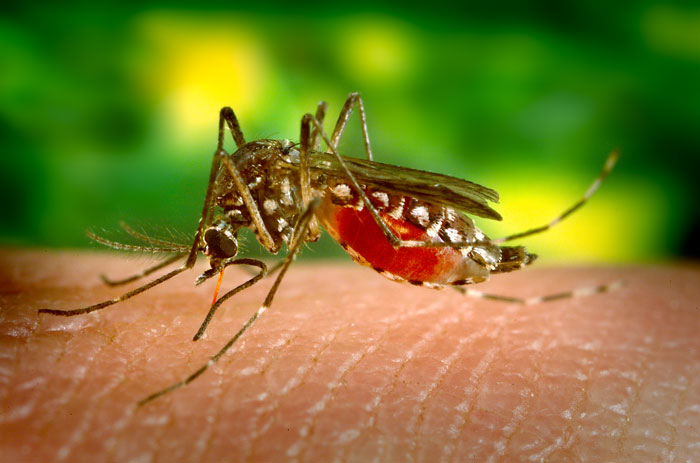
The popular answer—“mosquitoes prefer type O”—turns a small and conflicting research field into a rule it cannot support. One experiment found more landings by Asian tiger mosquitoes on people with type O than type A. Another found that yellow-fever mosquitoes preferred cues associated with type B. A recent scientific review concludes that the connection between ABO blood group and biting remains ambiguous. Blood type may contribute under some conditions, but it does not tell you who will be bitten in a garden, bedroom or outbreak.
The type O claim comes from real research—but not a universal result
A 2004 study exposed 64 volunteers’ forearms to proboscis-amputated female Aedes albopictus mosquitoes and counted landings. Type O participants attracted more landings than the other ABO groups, but the statistically significant difference was specifically between type O and type A. The experiment studied one mosquito species under controlled conditions; it did not measure every species, natural biting over time or disease risk. Journal of Medical Entomology: Aedes albopictus landing study
A 2021 laboratory study of Aedes aegypti reported a different pattern: mosquitoes showed their strongest attraction and feeding response around blood group B treatments. Digestion was highest after type O blood, which is a separate biological outcome from host choice. Artificial membrane feeding and odour-choice chambers can isolate variables, but they do not reproduce a person moving through a complex outdoor plume. PubMed: Aedes aegypti host-seeking and blood groups
A 2024 review put the studies side by side and described the ABO association as ambiguous, noting different results among Aedes and Anopheles mosquitoes as well as small samples and possible confounding. That is the defensible conclusion: blood group has been investigated, but “the mosquito’s favourite” changes with species and experimental design and may not be a stable biological hierarchy. Review: how mosquitoes choose their blood meal
A mosquito detects a person before it encounters blood
Blood type is inside the circulatory system. A host-seeking mosquito approaches through a sequence of external signals: exhaled carbon dioxide, moving air, odour molecules from skin, body heat and visual contrast. The importance of each signal changes with distance, wind, light, mosquito species and whether the insect is actively seeking a host. No single cue functions like a universal beacon.
Carbon dioxide is useful at range because breathing animals produce it continuously. Exercise can increase the plume by raising ventilation, while a larger body can emit more in absolute terms than a smaller one. That does not mean mosquitoes calculate weight or fitness. It means a stronger plume can make a host easier to locate under particular conditions. Once close, warmth, moisture and skin chemicals help the insect decide where to land.
Visual context matters too. Dark, high-contrast shapes can be easier for some day-active mosquitoes to track once carbon dioxide has activated host-seeking. The old advice to wear pale clothing is therefore plausible for exposure reduction, but clothing’s more reliable benefit is physical coverage. A loose long sleeve blocks access in a way that changing colour alone cannot guarantee.
Skin odour produces persistent mosquito magnets
A 2022 Cell study repeatedly tested human odours collected on nylon sleeves. Individual attractiveness to Aedes aegypti remained strikingly stable across months and across different mosquito strains. Highly attractive participants had higher levels of particular skin-derived carboxylic acids. Because carbon dioxide and temperature were held constant during the odour tests, the result points to skin chemistry rather than breath or warmth as the discriminator in that experiment. Cell study: skin carboxylic acids and mosquito attraction
Carboxylic acids are not a practical invitation to scrub the skin harshly or mask it with perfume. Skin chemistry is produced by human biology and modified by the microbial community living on the skin. Soap, cosmetics, illness and environment may alter odour temporarily, but the study did not establish a safe way to turn a highly attractive person into a low-attraction one.
A 2026 experiment involving 119 participants also found that Aedes aegypti, Aedes albopictus and Culex quinquefasciatus did not rank people identically. Odours and bacterial groups associated with attraction differed among the three species. That result helps explain why a person can feel like a mosquito magnet in one place but not another: the local mosquito is part of the equation. iScience: species differ in which humans they prefer
Secretor status is interesting, but not a household test
About four decades of discussion have linked mosquito choice not only to ABO group but to “secretor” status—the presence of soluble blood-group antigens in saliva and other fluids. The 2004 landing study reported differences within its volunteer groups, and older work is often quoted as proof that mosquitoes can identify secretors through skin cues.
The limitation is easy to lose in retelling. Secretor status is entangled with the same external odour mixture that contains many other molecules, while sample sizes have often been small. A landing preference in one cage is not a clinical risk calculator. There is no public-health recommendation to obtain blood-group or secretor testing in order to choose mosquito protection.
Pregnancy, recent exercise, skin microbes, illness, local climate and the mosquito’s own species and physiological state can all change the encounter. Even a genuine average difference would overlap heavily: many type A people are bitten often, and many type O people are not the preferred host on a given evening. A population-level association cannot predict an individual bite.
Only female mosquitoes take the blood meals that concern us
Adult mosquitoes use plant sugars for energy. In species that feed on people, females take blood to obtain nutrients used in egg production. Males do not normally seek human blood. That is why the sex of the mosquito matters for disease transmission and why a feeding photograph usually shows a female with an expanding abdomen.
Not every female mosquito bites people. Some species prefer birds, amphibians or other mammals; others are opportunistic. A species that strongly prefers humans can be especially effective at moving a pathogen between people, but transmission still requires the mosquito, pathogen and local conditions to align. A bite does not automatically mean infection, and an ABO group has not been established as protection from mosquito-borne disease.
Time of day is species-specific as well. The blanket claim that mosquitoes bite only at dawn and dusk is unsafe in places with Aedes aegypti, which commonly bites during daylight. Other species are most active in the evening or at night. Protection should match the vector and destination instead of relying on one timetable.
Prevention works without knowing your blood type
The US Centers for Disease Control and Prevention recommends repellents registered for effectiveness, loose-fitting long sleeves and trousers, treated clothing where appropriate, and mosquito control around buildings. Useful repellent ingredients include DEET, picaridin or icaridin, IR3535, oil of lemon eucalyptus, PMD and 2-undecanone. Follow the product label because age limits, application and duration vary. CDC: preventing mosquito bites
- Apply a registered repellent to exposed skin as directed; more is not automatically better.
- Do not apply permethrin to skin. Use it only on clothing or gear according to the product instructions.
- Use window screens, nets or air-conditioned rooms where mosquito-borne disease is a concern.
- Empty or cover standing water around the home so containers do not become breeding sites.
- Check destination-specific health advice because the relevant mosquito, disease and biting time differ by region.
Blood type is fixed and mostly unactionable. Repellent, barriers and habitat control reduce exposure regardless of whether a future experiment favours O, B, A or no consistent group at all.
What we know people find interesting—and what remains unanswered
People notice that bites cluster. The observation is credible: controlled experiments repeatedly find large, persistent differences in the attractiveness of individuals. The uncertain part is the shortcut explanation. ABO type alone does not account for those differences, and a study of one mosquito cannot be silently applied to all mosquitoes.
The stronger research question is how genetic traits, skin lipids, microbes, behaviour and environment combine to produce an odour plume that a particular mosquito interprets as a good host. Researchers are beginning to identify molecules and microbial patterns, but translating them into safe, durable personal protection is a separate challenge.
So the practical answer is less dramatic than the myth. Mosquitoes can prefer certain people. Some experiments detect blood-group associations. Science has not established one favourite human blood type—and you should not use your blood group to decide whether you need protection.
Sources
- Review: how mosquitoes choose their blood meal
- Aedes albopictus landing preference and ABO groups
- Aedes aegypti host-seeking and blood groups
- Cell: skin carboxylic acids and mosquito attraction
- iScience: species-specific human attraction
- CDC: preventing mosquito bites
- Lead photograph by James Gathany, CDC, public domain
