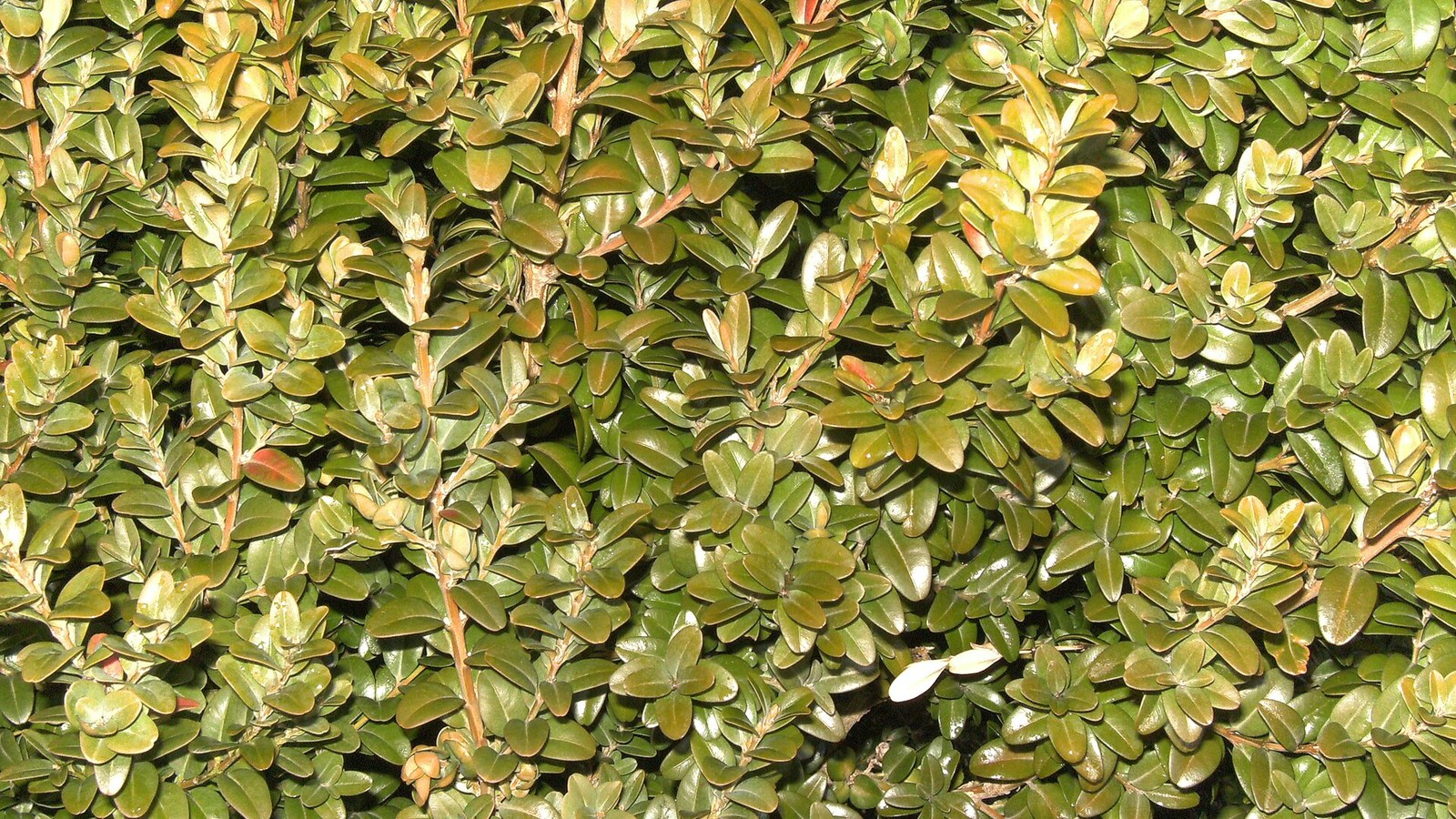
Yes. Some boxwoods have a strong smell that people compare with cat urine. The comparison is subjective, but the odour itself is not imaginary: researchers have identified an exceptionally potent sulphur compound in common box leaves, and botanical guidance also describes the flowers as malodorous.
The short answer
The smell is usually associated with common box, Buxus sempervirens, although plants sold as boxwood include several species and many cultivars. People perceive odours differently, so one gardener may find a hedge merely resinous while another finds it intolerable.
A flavour-and-fragrance study identified 4-mercapto-4-methylpentan-2-one in common box leaves. The compound has an extremely low odour threshold, which helps explain why a small amount can be noticeable. Concentrations in the study varied with location and weather, so a single description cannot predict every hedge. Flavour and Fragrance Journal study
Missouri Botanical Garden also lists common box among fragrant plants, but describes its April-to-May flowers as smelling like cat urine. The foliage finding and the flowering-season observation are compatible: more than one part of the plant may contribute to what a person notices. Missouri Botanical Garden fragrance guide
When the smell becomes obvious
Odour is often easier to notice in warm, still conditions, close to a large mass of foliage or while clipping and handling leaves. Flowering can add another seasonal source. A shrub beside a front door, bench or open window is therefore more likely to become a daily nuisance than the same plant at the end of a garden.
Before blaming the hedge, check nearby sources. Cat marking, damp drains, compost and some mulches can produce a similar impression. Smell the foliage at close range, then step away and return later. If the odour peaks when the plant is cut or flowering, that is useful evidence.
Test before you plant
A five-minute nursery test is more useful than relying on a catalogue description:
- Confirm the botanical name and cultivar, not just the word “boxwood”.
- Smell the actual plant on a warm day and, with staff permission, gently rub one leaf.
- Ask whether the specimen is flowering and whether mature plants are available to inspect.
- Picture the mature hedge beside doors, seating and windows before choosing its position.
- If smell sensitivity matters in the household, take everyone who will live with the planting.
What to do with an established hedge
First confirm that box is the source and note whether the problem is limited to flowering or pruning. Moving outdoor seating, changing the timing of clipping or improving airflow may be enough. Hard pruning will not permanently remove a smell produced by new leaves, and severe work can stress an already vulnerable hedge.
If the location makes the plant unpleasant year after year, replacement may be more sensible than trying to deodorise it. Choose for the site rather than appearance alone: soil drainage, exposure, mature size, desired height and clipping frequency all matter.
There is no universal box substitute
The Royal Horticultural Society warns that no single replacement matches every quality of box. Yew, privet, Lonicera nitida and other shrubs can form clipped structure, but each has different soil, light, maintenance and safety considerations. A local nursery can narrow the list for the exact conditions. RHS guide to box alternatives
Do not taste the plant to investigate its smell. North Carolina State University lists common box as toxic if eaten. Keep clippings away from children and animals, and use ordinary skin and eye protection when handling large amounts of foliage. NC State plant profile
