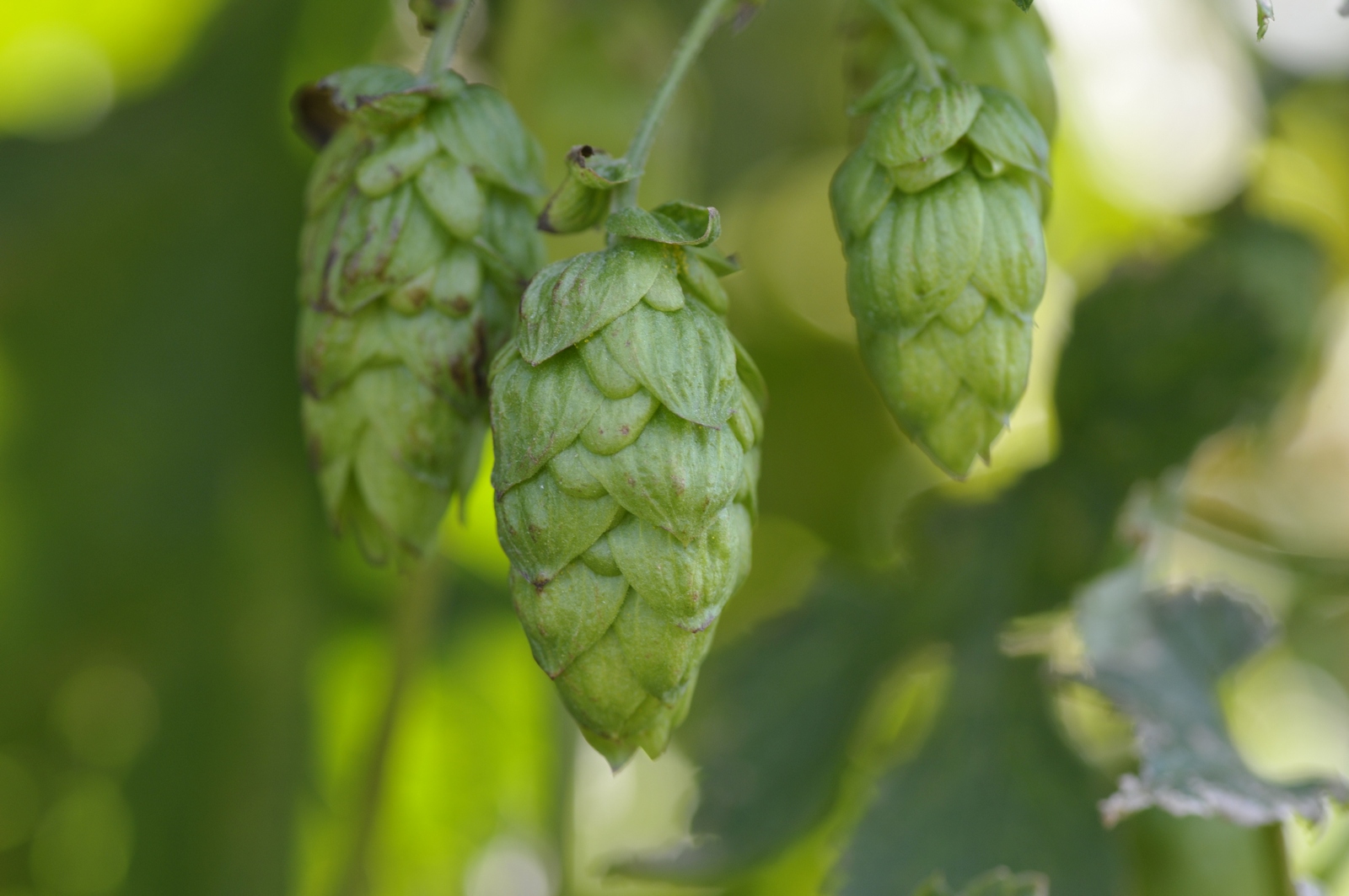
A hop cone can show red, bronze or purple pigment and still tell a brewer almost nothing reliable about how it will perform in beer. Colour is a plant characteristic influenced by genetics, maturity and growing conditions; it is not a substitute for a cultivar name, a lot analysis or a sensory rub. The old Articleous page turned “purple hops” into a supposed brewing category and tied it to claims about HBC 438, Willamette and health effects. Those links do not survive a source check. HBC 438 became the named variety Sabro, while Willamette is a different cultivar. Neither is defined by a purple cone.
There is no standard brewing category called purple hops
Brewers, growers and hop merchants normally identify hops by a named cultivar, breeding number or certified blend, followed by crop year, growing region, product form and lot-specific analysis. “Purple” is not one of those identities. A cone with pigmented bracts may be visually striking, but appearance alone cannot establish its parentage, alpha-acid content, oil profile or suitability for a recipe. Search results and casual product descriptions sometimes turn a colour observation into a variety name; the brewing supply chain does not.
The part of the cone most valuable to brewing is the lupulin-bearing tissue inside it. Its resins contribute bitterness and its volatile compounds contribute aroma. Exterior bracts protect that material and can vary in colour, but judging the outside is like choosing coffee solely by the colour of the cherry. It omits the cultivar, processing and chemistry that explain what will reach the glass.
A United States Department of Agriculture description of commercial hops places brewing value in the resins and essential oils of lupulin and describes ordinary market cones as yellow-green. Modern breeding and production add far more detail, but the basic distinction remains: visible cone colour is not a brewing specification. USDA: hops and their brewing constituents
HBC 438 became Sabro—not “purple hops”
HBC 438 was an experimental identifier used by the Hop Breeding Company. The American Homebrewers Association introduced it to homebrewers in 2015 through a programme that let members brew with a then-unnamed hop and report results. That history explains why old recipes and forum posts still use the number. It does not make HBC 438 a colour class or a synonym for every cone with a purple cast.
In 2018, John I. Haas announced that HBC 438 had been released commercially as Sabro. The company described a distinctive sensory range including tangerine, coconut, tropical fruit and stone fruit, with cedar, mint and cream in the background. Those are breeder and supplier descriptors for a named hop—not promises that every lot or every beer will display all of them. John I. Haas: HBC 438 introduced as Sabro AHA: the HBC 438 homebrew programme
Sabro can therefore be selected because a brewer wants its documented bittering range or its characteristic aroma potential. A supplier certificate, current crop information and a sensory check still matter because agriculture is variable. A photograph of the cone contributes almost none of that decision quality. If a seller labels an unidentified bag only “purple hops,” ask for the actual cultivar and lot information before designing a recipe around it.
Willamette is a separate variety with a separate history
The previous version also blurred Sabro with Willamette. Willamette is an established American aroma cultivar associated with English Fuggle parentage and a mild, herbal, earthy or spicy profile. Sabro comes from a different breeding line and is marketed for a much more fruit-forward and distinctive aromatic range. They may both appear in beer, but they are not two names for the same plant and should not be substituted merely because a cone or marketing image looks similar.
Substitution works when a brewer identifies the role a hop plays. For an early-kettle addition, matching approximate alpha acids may help preserve bitterness, though cohumulone and process conditions can still matter. For a late addition or dry hop, aroma character, oil intensity and interaction with yeast become more important. A hop selected mainly for structure in a restrained ale has a different job from one selected to dominate a hazy IPA.
If a recipe names Willamette, replacing it with Sabro is a creative recipe change, not a neutral correction. The resulting beer may be good, but it is likely to be different. The honest recipe note is “substituted Sabro for Willamette and expected a more tropical and coconut-led result,” not “used the purple form of the same hop.” Brewing improves when changes are recorded as decisions rather than hidden behind folk taxonomy.
Cone colour can change without changing variety
Plant pigments respond to genetics and environment. Sun exposure, temperature, maturity, stress, drying and oxidation can all affect visible plant colour. A purplish edge can be normal pigmentation; extensive browning can also signal age or damage. Those observations may prompt closer inspection, but they cannot identify the cultivar. Two cones from the same bine need not present exactly the same colour, and different cultivars can overlap visually.
Harvest timing changes what the brewer receives. An immature cone may be grassy and underdeveloped; an over-mature or poorly dried cone may have lost desirable volatiles or acquired oxidised, cheesy notes. Experienced growers examine texture, aroma, lupulin development and dry matter rather than waiting for a universal shade. Packaged hops then add another chain of custody: kilning, pelletisation, oxygen exposure, temperature and time.
For a homebrewer, the practical inspection is sensory and documentary. Check the cultivar, crop year and stated alpha acids. Inspect the package seal and storage history. When opening whole cones or pellets, look for obvious oxidation, dampness or contamination and smell a small rubbed sample. Rejecting a clearly degraded lot is sensible; inferring a flavour profile from purple pigment is not.
Use the lot analysis for bitterness and the nose for aroma
Yakima Chief Hops lists Sabro as an aroma hop and publishes a range for alpha acids and total oil along with expected sensory descriptors. Those figures are useful boundaries, but the alpha-acid percentage printed on the actual package is the number to use in a bitterness calculation. Crop averages do not replace a lot measurement. Yakima Chief Hops: Sabro variety data
Bitterness calculations remain estimates because utilisation changes with wort gravity, boil time, hop form, equipment and method. Still, calculating with the labelled alpha acids is much more reproducible than treating all cones of a named colour as equivalent. Record the mass, time, temperature and form of each addition. If the next crop differs, the brewer has enough information to adjust.
Aroma requires another kind of evidence. Open the lot, conduct a careful rub or steep a small sample, and decide whether its intensity and character suit the beer. Supplier descriptors help build expectations but do not dictate perception. Fermentation can transform hop-derived compounds, and recipe context changes what becomes prominent. The sensory result belongs to the combination of hop, yeast and process—not to a pigment on the bract.
Do not turn a brewing ingredient into a health claim
The old page moved from cone colour to assertions about relaxation, sleep and other health effects. That is a category error. Research on isolated hop compounds, traditional herbal preparations or laboratory models does not establish that a particular brewing hop treats a condition when consumed in beer. Dose, extraction, route of administration and alcohol all change the question. A brewing article should not convert an ingredient association into medical advice.
Beer is an alcoholic drink, and adding a fashionable hop does not make it a wellness product. Aroma descriptors such as mint, cream, citrus or coconut describe sensory impressions; they do not mean the beer contains those foods in a nutritionally meaningful amount. The same applies to colour. A purple tint can invite associations with anthocyanins or antioxidant marketing, but a photograph does not measure a compound, and a compound does not automatically establish a clinical benefit.
Keep tasting language in the glass: perceived aroma, flavour, bitterness, mouthfeel and finish. Keep health questions with properly designed human evidence and qualified guidance. That boundary makes the brewing information stronger because it no longer asks one observation to prove variety identity, recipe performance and medical effect at the same time.
A reproducible hop decision takes five pieces of information
First, identify the cultivar or documented blend. Second, record crop year and origin when available. Third, use the package analysis—especially alpha acids—for the function being calculated. Fourth, assess freshness and storage. Fifth, smell or trial the lot for the aroma role. Those five observations make a brewing decision another person can understand and repeat.
When an unknown home-grown hop is the point, treat it as an experiment. Make a small single-hop trial or hop tea, document the quantity and timing, and keep a control beer if possible. Do not assign the plant a commercial name from appearance. If identification matters beyond curiosity, trace the planting source or use expert botanical or genetic identification; a cone photograph will rarely settle it.
The myth is therefore useful because it reveals a broader habit. Brewers sometimes reach for an evocative label when the material evidence is available but less glamorous. “Purple hops” sounds like a hidden ingredient. Cultivar, crop, chemistry and sensory condition sound like paperwork. Yet those are the facts that protect a batch and make a successful one teachable. Colour can be noted. It should not be promoted into an identity it cannot support.
