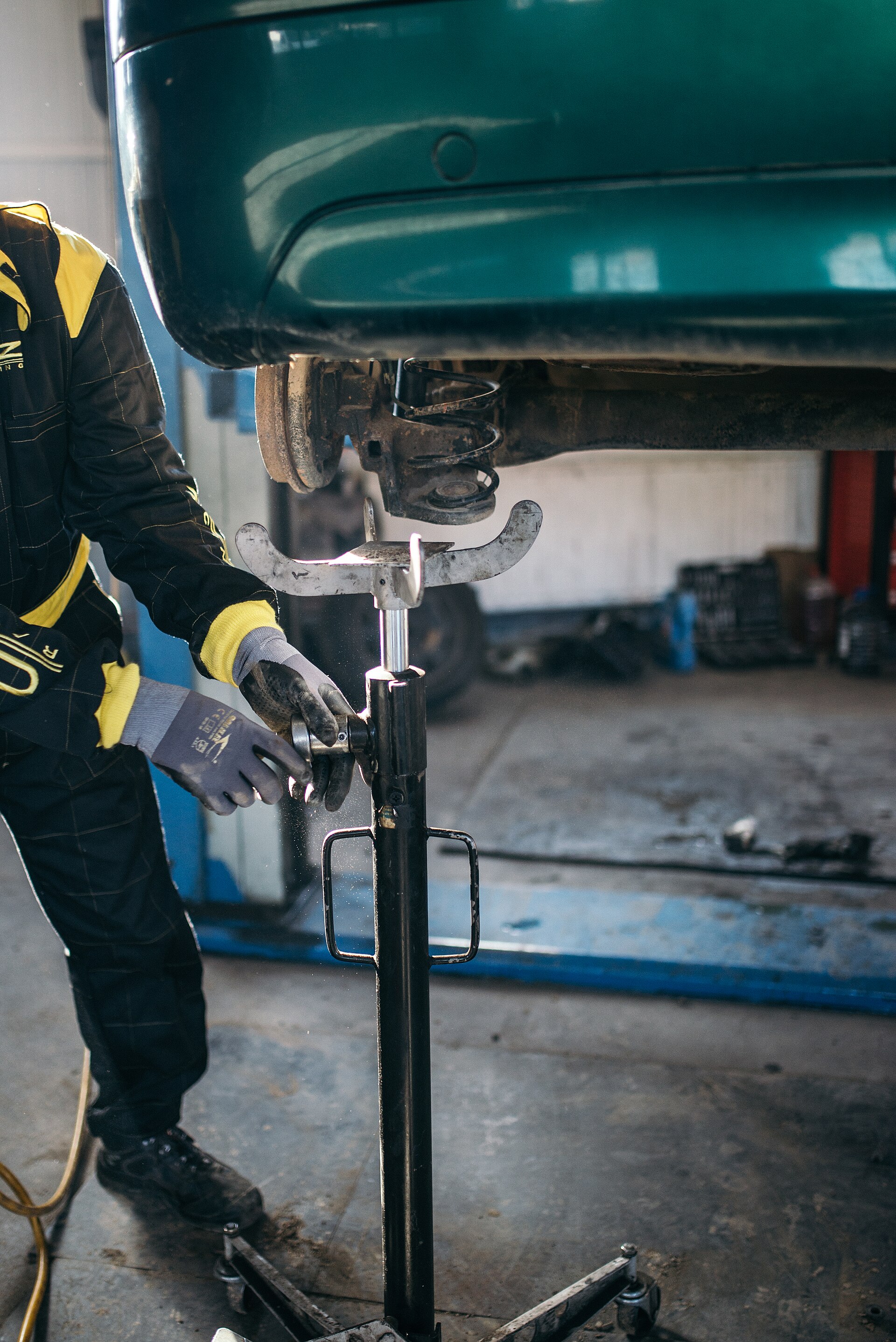
Electric-vehicle service is not a clean break from the mechanical trade and it is not a single new occupation with one licence or salary. Most people doing the work are automotive technicians who have added electric-drive diagnosis and formal high-voltage safety competence to existing skills. They still see worn tyres, wheel bearings, suspension faults, cabin filters and collision damage. What changes is the energy source: a traction battery can deliver dangerous current even when the car is silent, so isolation, verification and controlled access are part of the repair rather than paperwork around it.
The job begins with diagnosis, not battery replacement
The US Bureau of Labor Statistics describes automotive technicians as people who inspect, maintain and repair cars and light trucks, using computerised diagnostic equipment as well as hand and power tools. Its current occupational profile now explicitly includes technicians who focus on battery performance, regenerative braking and electric-motor efficiency. BLS: automotive service technicians and mechanics
A customer may report reduced range, slow charging, a warning message or intermittent loss of power. The technician has to reproduce the complaint, read diagnostic trouble codes, understand network communication, check service information and separate the vehicle from the charger, cable or external temperature conditions. Replacing the most obvious expensive component is not diagnosis. Battery packs, inverters, onboard chargers and electric compressors can all produce symptoms that overlap.
Many jobs never require opening a high-voltage enclosure. Software updates, 12-volt battery faults, coolant leaks, tyre wear, alignment, brakes and cabin heating remain everyday work. Regenerative braking can reduce friction-brake use but also change corrosion and inspection patterns. Electric vehicles may be heavier and deliver immediate torque, which can make tyre condition and alignment consequential. The useful technician understands the whole car and knows where high voltage changes the procedure.
High voltage changes the definition of a safe workshop
Orange cables and warning labels identify part of the risk, not all of it. The traction system can retain energy after shutdown, and crash damage or water intrusion can make normal assumptions unsafe. Before intrusive work, an authorised technician follows the manufacturer’s isolation sequence, prevents reconnection, waits the specified discharge time, verifies absence of voltage with suitable equipment and controls the work area. The sequence and personal protective equipment depend on the vehicle and task.
ASE’s xEV framework separates electrical-safety awareness from technician-level high-voltage work. Its Level 1 standard is for people who may encounter electrified vehicles; Level 2 addresses technicians who service them. That distinction is useful beyond the US: awareness training, de-energised work and live electrical work are not interchangeable permissions. ASE: xEV high-voltage electrical safety certifications
Insulated gloves have test dates and inspection rules. Meters, leads and rescue equipment need ratings appropriate to the system. Barriers keep an untrained colleague from walking into the work zone. A written process must also cover damaged batteries, thermal events and quarantine. Good safety is deliberately repetitive because the cost of skipping one verification can be fatal. Anyone evaluating a course should ask how it teaches isolation, proving the tester before and after use, and task-specific authorisation—not simply whether “EV” appears in the title.
Training starts broad and becomes specific
BLS says US automotive technicians typically complete a postsecondary automotive-service programme, although some enter with a secondary-school education and learn on the job. It reports that certification may be required and that technicians need electronics, computer and mechanical knowledge. The route differs across countries, employers and regulated tasks. BLS: entry routes, skills and certification
A strong foundation includes electrical measurement, wiring diagrams, CAN or other vehicle networks, mechanical systems, braking, heating and air conditioning, safe lifting, documentation and customer communication. EV specialisation then adds battery architecture, contactors and interlocks, insulation monitoring, power electronics, thermal management, charging standards and manufacturer diagnostic platforms. Hybrid vehicles add an internal-combustion engine and fuel system rather than subtracting electrical risk.
Choose programmes by practical access and assessment. Ask how many hours are spent with real vehicles, whether students perform supervised isolation, what faults they diagnose, who maintains the equipment and which credential employers recognise locally. Manufacturer academies can be valuable but may be narrow. Independent qualifications can travel better but still require model information. Apprenticeships and dealership routes provide repetition under supervision; a classroom certificate without workshop practice is a beginning, not proof of competence.
Demand is real, but the headline shortage needs geography
BLS projects employment for all US automotive service technicians and mechanics to grow 4% from 2024 to 2034, with about 70,000 openings a year largely because workers leave the occupation. The 2024 median wage was $49,670. BLS does not publish a separate national wage series for “EV technician,” so a single higher salary quoted for that title should not be treated as a universal market rate. BLS: pay and 2024–34 outlook
In the UK, the Institute of the Motor Industry reported 71,942 EV-qualified technicians in the third quarter of 2025, about 26% of the workforce, while warning that qualification growth was not closing the forecast skills gap. That is a specific credential count and labour-market projection, not a global estimate. IMI: Automotive Education Report, edition 16
Local demand depends on the age and mix of vehicles, warranty networks, fleet electrification, collision repair and whether independent shops can obtain tools, information and insurance. Early in a market transition, dealers may hold most battery work while independent garages see tyres, brakes and general service. A prospective trainee should sample local job advertisements, speak to workshops and identify the exact credentials named. “EVs are growing” does not by itself guarantee an entry-level specialist role.
A normal day mixes screens, tools and explanations
The day can begin with a vehicle history and a customer description that does not match the fault code. The technician checks technical bulletins, battery state, charging logs and environmental conditions, then plans tests that avoid changing several variables at once. After a repair, the work may need calibration, software configuration, a road test and charging verification. Documentation matters because warranty decisions and later diagnosis depend on the sequence and measurements recorded.
Physical demands remain. Technicians stand, bend, lift wheels, work below raised vehicles and handle awkward trim. Computer literacy does not replace safe tool use. Communication matters too: “the battery is bad” is not an adequate explanation when the fault is a module imbalance, coolant problem, 12-volt supply or charging handshake. A good report separates observation, test result, cause, remedy and remaining limitation.
The work also creates boundaries. Some shops replace complete assemblies; specialised centres repair packs at module or component level. Collision-damaged and water-exposed batteries may require quarantine and expert assessment. A technician can be competent to isolate a vehicle without being authorised to open its pack. Career progression therefore comes from documented competence at increasing levels, not from treating every orange cable as the same job.
How to test whether the career fits
Spend time in a real workshop before paying for a narrow course. Observe whether the employer supplies diagnostic subscriptions, insulated tools and continuing training. Ask how technicians are paid, who owns ordinary tools, how warranty times affect income, and what happens when diagnosis takes longer than a flat-rate allowance. These conditions can matter more to job quality than the powertrain label.
Build evidence of careful work: electrical test plans, fault trees, measurements, repair records and safe procedures. Employers need people who can follow a service manual, stop when the evidence changes and explain uncertainty. Coding knowledge can help with data and networks, but automotive diagnosis also requires mechanical judgement and disciplined measurement. No single “EV technician” personality is required; curiosity without improvisation is the useful combination.
The transition will not make combustion skills worthless overnight, nor will it leave the trade unchanged. Fleets will contain petrol, diesel, hybrid and battery vehicles for years. A technician who understands conventional chassis systems, electronics and high-voltage safety can work across that mixed reality. That is the durable proposition: become an automotive technician with electrified-vehicle competence, not a battery specialist who has skipped the car around it.
