A veterinarian can arrive early, sort every task by priority and still finish the day with six open records. The missing variable is usually not personal discipline. It is a clinic system that books unlike cases into identical slots, accepts urgent work without reserving capacity and lets every interruption reach the veterinarian. Research links workload, long hours and the inability to complete work within rostered time with burnout in veterinary practice. That does not make a single scheduling method a cure. It does mean the first question should be “where does the work exceed the system?” rather than “why can’t this person keep up?”
Treat chronic lateness as operational evidence
A 2023 review of veterinarian burnout found that workload and time pressure recur across studies, alongside effects on job satisfaction and intention to leave. The review argues that schedules should account for case complexity and task load rather than assume every clinician and every consultation can be standardised in the same way. Veterinarian burnout demographics and organisational impacts: narrative review
A qualitative study of occupational stressors adds the human detail: participants described unexpected appointments being crammed into full schedules, records completed after hours and working days that extended to ten or fourteen hours. Some worried that the pace affected both their decisions and patient care. This was a small qualitative sample, so it cannot tell every clinic how common each experience is. It does show why repeated overruns should be examined as a work-design problem rather than dismissed as poor resilience. Occupational stressors and their impact on veterinary professionals
The distinction matters. A one-off emergency can wreck a well-designed afternoon. A clinic that overruns almost every afternoon has a repeatable mismatch between demand, capacity and ownership. Personal techniques may help at the margin, but no colour-coded list creates another consult room, technician or hour. Leaders have to decide what work the clinic can safely promise and how that work moves through the team.
Begin with a ten-day flow audit
Before changing slot lengths or buying software, record what actually happens for ten ordinary working days. Ten days is an Articleous starting experiment, not a universal research threshold. It is long enough to include different weekdays and short enough that a team can finish it without creating a second administrative project.
For every booked encounter, capture the appointment type, planned start, actual start, planned duration and actual finish. Mark whether it involved a new patient, several problems, diagnostics, an unexpected admission, a language or communication need, or a same-day add-on. Separately record calls, prescription requests, result discussions, insurance forms and messages that reached the clinical team. At shift end, count unfinished records and note the actual leaving time. Record missed breaks without turning them into a performance score.
The point is not to rank clinicians. De-identify staff in a shared review if that makes reporting safer. Look for patterns at the level of the system: dental checks that regularly become longer discussions, senior-pet visits that trigger tests, urgent add-ons concentrated after lunch, or discharge calls arriving during the busiest consulting block. If the data become a surveillance exercise, people will reasonably hide the very friction the clinic needs to understand.
Build appointment types from observed work
A study of appointment scheduling in UK first-opinion small-animal practice found that 97.1 percent of participating practices reported some flexibility, most often allowing longer appointments for cases expected to be complex. The authors did not establish one ideal slot length; they argued that restructuring schedules for both veterinarians and nurses could affect wellbeing, skill use and practice performance. Appointment scheduling and workforce utilisation in UK veterinary practice
Use the audit to compare booked and actual time within meaningful case groups. A vaccination visit, new dermatology complaint, multiple-pet appointment and end-of-life consultation are not interchangeable units. Extend the categories that predictably overrun, and define what information reception should collect before booking. Do not create a fifteen-minute rule merely because another clinic uses fifteen minutes; use local evidence, then test whether the revised category reduces waiting and unfinished notes.
Reserve urgent capacity from the clinic’s own same-day demand rather than choosing an attractive round percentage. If the last month shows a recurring number and timing of genuine urgent cases, protect space where that demand appears. Decide in advance what qualifies, who triages it and what happens when the protected space is unused. Without those rules, a buffer becomes either wasted capacity or an ordinary slot that disappears before the emergency arrives.
Put recovery time inside the schedule
A schedule with no place to absorb variation can be on time only when nothing unusual happens. Test a ten- or fifteen-minute catch-up block after two or three consultations in the part of the day that most often slips. Use it for records, results or the spillover from a complex case. This interval is a practical trial, not a proven universal dose. Compare finishing time, open records and client waiting before and after the change.
Protect an actual meal and rest break as capacity, not as a blank square available to the first caller. If the clinic cannot cover an urgent patient while one person pauses, that is a staffing and contingency problem to solve explicitly. A break repeatedly sacrificed to routine demand is evidence that booked capacity is too high or work ownership is unclear.
In an Australian study of general-practice and emergency veterinarians, being able to complete tasks within rostered hours was strongly associated with lower work-burnout scores. Adequate staffing was also associated with lower burnout. The study was observational, so it does not prove that changing one roster will by itself prevent burnout. It does support tracking whether people can finish the work they are rostered to do. Workplace and personal factors associated with burnout in Australian veterinarians
Give every stage a safe owner
The American Animal Hospital Association’s technician-utilisation guidelines describe a role-based workflow: client-service staff collect the reason for the visit and relevant records; trained veterinary technicians or nurses obtain history, triage, document problems and may begin protocol-led work within their legal scope; the veterinarian examines, diagnoses, prescribes and performs veterinarian-only procedures; and the wider team supports nursing, discharge and follow-up. The guidelines were supported by CareCredit, Hill’s Pet Nutrition and IDEXX, which readers should know when weighing the source. 2023 AAHA Technician Utilization Guidelines
Translate that model into the roles and laws where the clinic operates. Scope of practice, supervision and titles differ by country and jurisdiction. Delegation is not dumping work on the least senior person. It requires competence, training, written protocols, an escalation route and enough time for the assigned professional to do the work safely.
Map one common visit from booking to follow-up. For each step, name the default owner, the information required, the point at which the veterinarian must enter, and the condition that triggers escalation. If three people assume somebody else will obtain a medication history, the veterinarian discovers the gap in the consult. If everybody can interrupt the veterinarian with every question, the nominally delegated workflow still has one bottleneck.
Create an interruption rule, not a closed door
Clinical work cannot be interruption-free. The useful distinction is between an interruption that changes patient safety now and work that can wait for a defined review point. Agree on a small set of immediate escalation triggers—such as deterioration in a hospitalised patient, a time-critical medication question or a triage concern—and route other requests to a visible queue.
For one week, test two protected review windows of twenty to thirty minutes for routine results, refill questions and non-urgent messages, provided local regulation and patient safety allow the delay. Tell the client when to expect an answer; a queue without a service promise simply moves uncertainty elsewhere. Give one team member responsibility for flagging anything that becomes urgent.
Do not use batching to hide inadequate access. A distressed owner, a rapidly changing patient or an unclear triage call may need immediate clinical review. The rule should make escalation easier and routine noise less random. Audit missed or delayed items, then adjust the definitions with the people who answer the phones and monitor patients.
Close records as part of care, not invisible overtime
A record is not optional administrative residue. It supports continuity, communication, charging, legal accountability and the next clinical decision. Schedule documentation as part of the encounter or its catch-up block. Templates can reduce repetitive typing, but they need patient-specific editing; copied normal findings and stale plans create clinical risk rather than efficiency.
At the end of each consulting block, count open notes. If they accumulate at the same point every day, inspect the preceding workflow. Perhaps histories arrive incomplete, diagnostics are ordered without a result-review owner, or the booked slot excludes documentation time. The corrective action should target that cause. Asking everyone to type faster is not a process analysis.
RCVS Knowledge publishes end-of-day and in-patient checklists designed to improve consistency in handovers and task completion. A checklist can make the close of day visible, but it should remain short enough to use and must not substitute for clinical judgment. RCVS Knowledge end-of-day and in-patient checklists
Run one change as a measured experiment
Choose the clearest bottleneck from the audit and change only enough to learn. A clinic might lengthen one appointment category, preserve one urgent slot, move pre-visit histories to a technician or introduce two message-review windows. Write down the expected effect before starting. Run the trial for another ten working days unless safety or service failure requires an earlier stop.
Track a small scorecard: percentage of shifts finishing within rostered time, open records at shift end, missed breaks, median client waiting time, urgent cases accommodated, and any reported safety event or near miss. Add one short team question: what became easier, and what work moved somewhere less visible? A change that improves the veterinarian’s finish time by creating unpaid overtime for nurses is not an improvement.
Review the result with the whole affected team. Keep the change, adapt it or remove it. Then take the next bottleneck. This deliberately slower sequence is more informative than launching new templates, booking rules, huddles and software at once and discovering that nobody can tell which part helped.
Use a brief huddle to manage today’s exceptions
A five- to ten-minute start-of-day huddle can identify the cases most likely to need extra coordination: an anxious animal requiring a quiet route, a complex discharge, an interpreter need, a staff absence, a double-booked room or a result that must be discussed. Name the owner and the planned moment for each task. Keep the meeting focused on exceptions rather than reading the entire diary aloud.
End the day with an equally brief safety close: patients accounted for, critical results assigned, medicines and controlled tasks completed, client promises handed over, and unresolved records visible. If the close repeatedly finds more work than the remaining team can complete, escalate that pattern to leadership. A checklist should reveal a capacity problem, not normalise staying late.
Recognise when the answer is more capacity or less demand
The Royal College of Veterinary Surgeons’ 2022–2024 exit survey found that respondents leaving the profession cited chronic stress, workload and wider sector pressure. The survey covers people at the point of leaving a register or UK-practising category, so it should not be treated as a prevalence estimate for every veterinary workplace. It is a warning that work design belongs in retention decisions. RCVS Exit Survey 2022–2024
If measured demand remains above safe capacity after obvious friction is removed, leaders face a real choice: add trained staff or hours, change the service mix, cap bookings, refer some work, alter opening promises or accept longer access times with clear triage. None is painless. Pretending an individual productivity trick will erase the constraint merely pushes the cost into overtime, errors, absence and turnover.
The same boundary applies to self-care. Sleep, exercise and recovery matter, but they cannot compensate for a roster that requires routine unpaid work to function. A humane clinic makes individual wellbeing possible by designing a credible workload, not by prescribing resilience after every slot has been filled.
A practical first month
Week one and week two: collect the flow audit without changing targets or judging individuals. At the end of week two, choose one recurring bottleneck and agree on its safety boundaries. Week three and week four: run one controlled change, track the small scorecard and check for displaced work. At month end, decide whether to keep, modify or reverse it.
Make learning accessible to the people doing the work. Articleous and Succes i Veterinær Praksis share ownership. Danish-speaking veterinarians and veterinary nurses who want practice-oriented professional resources can explore the related reader resource at Succes i Veterinær Praksis
The useful definition of veterinary time management is not doing every task more quickly. It is matching promised work to real capacity, putting each step with the right trained person and leaving enough space for the uncertainty that clinical care inevitably brings. When the clinic can see where time goes, it can make an operational decision instead of assigning private blame.
Sources
- Veterinarian burnout demographics and organisational impacts: narrative review
- Occupational stressors and their impact on veterinary professionals
- Workplace and personal factors associated with burnout in Australian veterinarians
- Appointment scheduling and workforce utilisation in UK veterinary practice
- 2023 AAHA Technician Utilization Guidelines
- RCVS Exit Survey 2022–2024
- RCVS Knowledge end-of-day and in-patient checklists
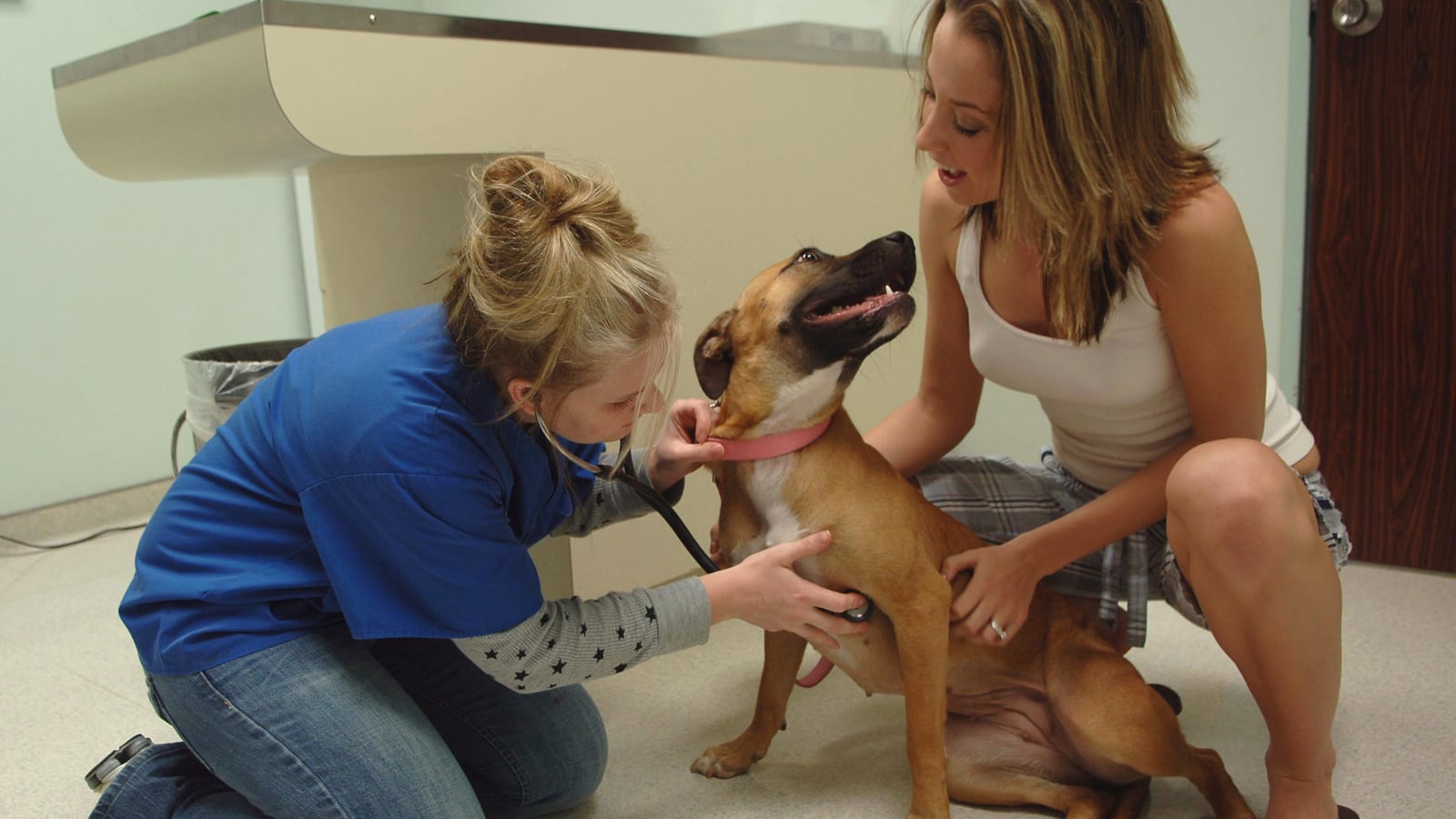
- Lead photograph by Senior Airman Veronica Pierce, U.S. Air Force, public domain
