For an everyday English–Spanish lookup, SpanishDictionary.com is a useful starting point because it puts translation, pronunciation and verb forms close together. For an awkward phrase, WordReference adds a route into discussion. Once the question becomes what a Spanish word means in Spanish, or whether a construction is standard, turn to the RAE and ASALE reference works. The best choice changes with the task; keeping two complementary references is more useful than looking for one universal winner.
Start with the job: meaning, translation or usage
An English–Spanish dictionary maps senses between languages. A monolingual Spanish dictionary explains a word using Spanish. A sentence translator proposes a rendering of a whole passage, while a context search engine retrieves examples from texts that have already been translated. Their search boxes look similar, but the evidence behind the answer differs.
If you are reading and only need the meaning of one unfamiliar noun, a bilingual entry is usually the shortest route. If you are writing, the task is harder: you need the right sense, grammatical pattern and level of formality. A possible equivalent is only the beginning. If you are checking an entire paragraph, use a translator as a draft and return to a dictionary for the words on which the meaning depends.
Our recommendations below are based on the services’ public reference pages and documentation checked in September 2026. They are task-based editorial choices, not a timed accuracy competition, a survey of all entries or a claim that one service always translates better. Core lookup pages are publicly accessible; account requirements, advertising and optional paid features can change.
SpanishDictionary.com: a convenient first stop for learners
SpanishDictionary.com brings dictionary entries, sentence translation, examples and conjugation into one service. Its pronunciation controls let you choose Spain or Latin America and switch between spelling broken into syllables, its own simplified phonetic alphabet and the International Phonetic Alphabet. That is a concrete advantage when you want to connect a word on the page to a spoken form. Pronunciation controls explained
For verbs, open the Conjugation tab after a lookup, or search directly in the conjugation tool. Check which language the chart shows: the service offers English as well as Spanish conjugations. Its documentation also describes example sentences and pronunciation linked to conjugated forms. That makes it useful for the gap between recognising an infinitive and recognising the form actually used in a sentence. Conjugation access Conjugation features
Choose it when you want a compact learning workflow. Treat the regional audio choice as a pronunciation aid, however, rather than proof that every word is equally natural in every Latin American country.
WordReference: follow the phrase, then read the discussion critically
WordReference is particularly useful when a word belongs to a larger expression. Its bilingual reference pages connect with a substantial forum, including dedicated Spanish–English vocabulary discussions. The useful move is to search for the whole troublesome phrase, then see whether an entry or discussion addresses that particular use. WordReference English–Spanish dictionary WordReference language forums
Keep the dictionary and the forum separate in your mind. An edited entry is a reference treatment; a forum answer is a contribution by a participant. A good discussion can reveal why an expression sounds formal, local, dated or wrong in a particular sentence. It cannot establish that everybody in a country speaks that way. Look for the original question’s context, the contributor’s stated variety of Spanish and whether other participants explain or challenge the answer.
This is a strong second stop when a simple lookup leaves you with several plausible choices. It is a less efficient first stop if you merely need a familiar noun and find yourself reading a long argument about a different context.
Cambridge and Collins: two reference-led alternatives
Cambridge’s English–Spanish dictionary draws on the Cambridge English Corpus and the English Vocabulary Profile, including meanings across CEFR levels A1–C2. Its emphasis is helpful when the starting difficulty is the sense of an English word that you need to express in Spanish. Read the definition and example before choosing the translation; the English–Spanish landing page should not be mistaken for a Spanish-only dictionary. Cambridge English–Spanish dictionary
For instance, an English learner looking up “embarrassed” needs the sense associated with discomfort or shame. The visual resemblance to “embarazada” is a trap, not a translation strategy. A dictionary entry with a clear gloss is more useful here than a list of matching-looking words. Cambridge’s entry provides a direct place to check that distinction.
Collins offers an established English–Spanish and Spanish–English reference with idioms, examples and pronunciation, alongside grammar and conjugation resources. It is a useful alternative when you want to read a fuller entry and see several senses together. The service advertises more than 420,000 translations, but an entry count does not tell you whether its treatment of your particular expression is the most useful. Collins Spanish dictionary Cambridge: embarrassed
Try a word you actually need in both references. The relevant comparison is whether the entry resolves your uncertainty: which meaning, which construction, which register? Choosing by the biggest advertised database skips that test.
RAE and ASALE: use the right Spanish reference
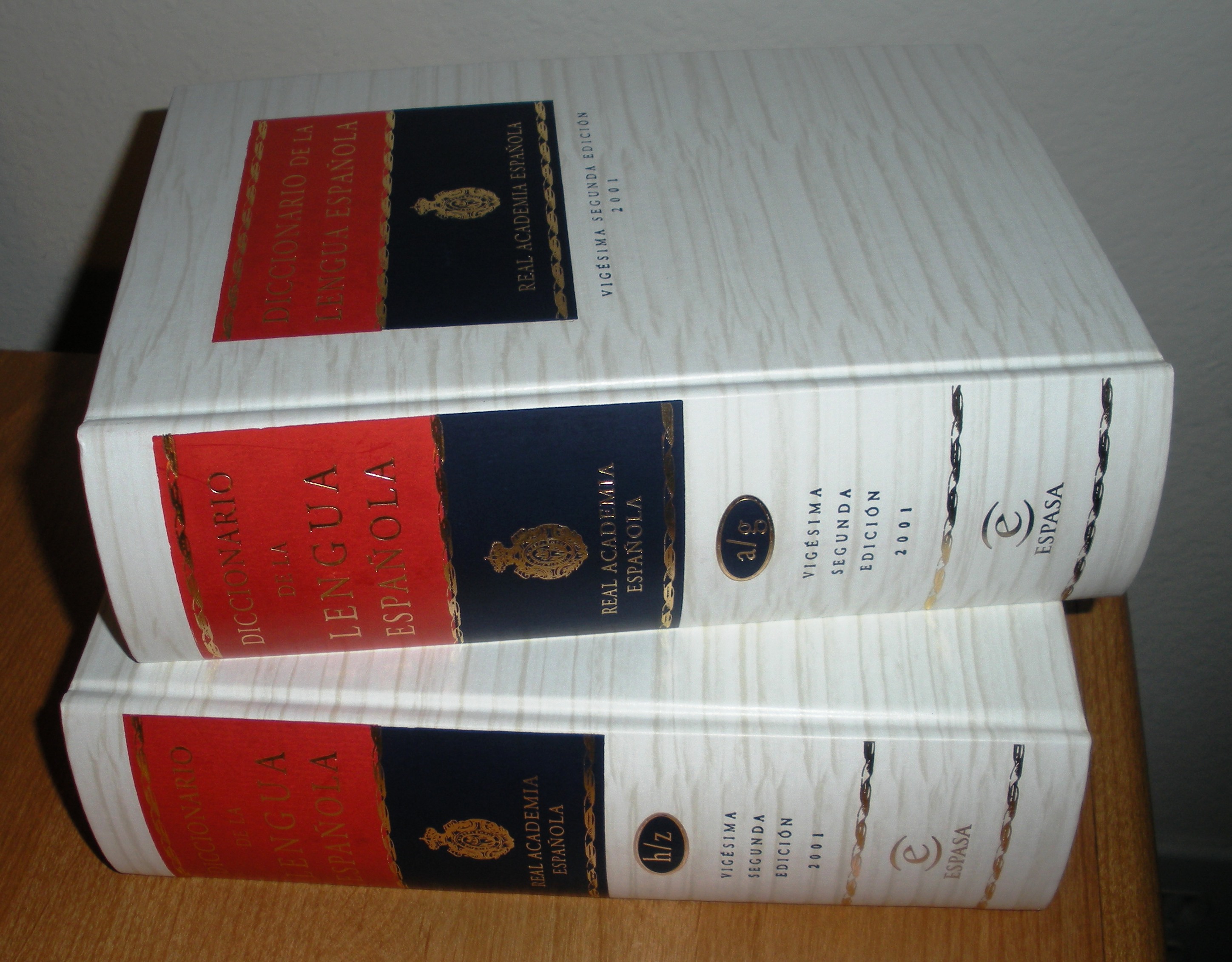
The Diccionario de la lengua española, or DLE, is the RAE and ASALE’s general Spanish dictionary. Its definitions are in Spanish. That makes it a useful check once you have a candidate word and want to understand its senses without passing through an English equivalent. It is not an English-to-Spanish sentence translator. Diccionario de la lengua española
A usage problem may belong in the Diccionario panhispánico de dudas, or DPD. ASALE describes its scope as including pronunciation, accents, spelling, plurals, conjugation, sentence construction and vocabulary questions. If the uncertainty is how a word behaves or whether a construction is appropriate, searching this reference can be more productive than repeatedly searching a general dictionary. ASALE: scope of the DPD
For regional vocabulary in the Americas, the Diccionario de americanismos adds another layer. Follow the geographical and usage labels instead of treating “Latin American Spanish” as one uniform variety. These reference works are complementary: a general definition, a usage explanation and a regional entry can each answer a different part of the same question. Diccionario de americanismos
Reverso Context: examples are evidence to examine
Reverso Context retrieves material from already translated texts. Its own explanation acknowledges that examples can contain mistranslations, alignment problems and typographical errors, as well as slang or inappropriate language. That warning changes how to use the tool: compare several relevant examples and check the proposed expression against an edited reference before relying on it. How Reverso Context works
A matching sentence can show a phrase in use without proving it is the best choice for your audience. A subtitle, contract and casual conversation have different constraints. Read enough of each example to establish who is doing what, and whether the meaning and register match your sentence. Several examples from the same translated work are not several independent confirmations.
Use context search after narrowing the dictionary senses. It is especially helpful for seeing the words that commonly sit beside a candidate expression, but it should not become a vote in which the largest pile of results automatically wins.
A lookup routine that catches the common mistakes
Keep the complete sentence in view. Identify whether the missing item is a noun, verb, adjective or part of an expression. Then search the word or phrase, read the relevant sense and compare its example with your sentence. Only after that should you choose an equivalent and check how it changes grammatically.
Consider the English word “get”. A sentence about obtaining a ticket, arriving home or becoming tired poses three different translation questions. Searching that single word and taking its first equivalent is not enough. The surrounding words tell you which sense you need; the dictionary tells you how that sense is expressed. The same method applies when a familiar-looking Spanish word turns out to have an unfamiliar use.
When a verb form is hard to identify, use conjugation support to connect it to its infinitive and check person, tense and mood. When a noun is the problem, record its grammatical gender along with the word. When an expression contains a preposition, preserve the construction rather than memorising the main word in isolation. A short example you understand is a better note than a long list of possible equivalents.
Finally, check the direction of your lookup. Looking up an English word in Spanish and then translating the chosen Spanish word back can expose an obvious wrong sense, but a round trip is not proof of correctness. A broad word can return the starting term even when the intended sentence is unnatural. The decisive check remains the meaning and grammar in context.
Which one should you keep open?
For a beginner, start with SpanishDictionary.com and keep one reference alternative available. For a difficult expression, move to WordReference and read the relevant discussion. For a question about Spanish definition or accepted usage, open the DLE or DPD. Add Americanismos when the regional label matters and Reverso when you need contextual examples to examine.
There is no need to consult every service for every word. Escalate when the first answer leaves a real ambiguity: several senses that could fit, a surprising gender, a regional label, a colloquial expression or a construction you do not recognise. For material where an error has serious consequences, such as a contract or clinical instructions, a web lookup is not a substitute for qualified language review.
A useful dictionary habit ends with a decision you can explain. You chose that word because its sense, construction and register fit the sentence—not because it was the first bold result on the screen.
