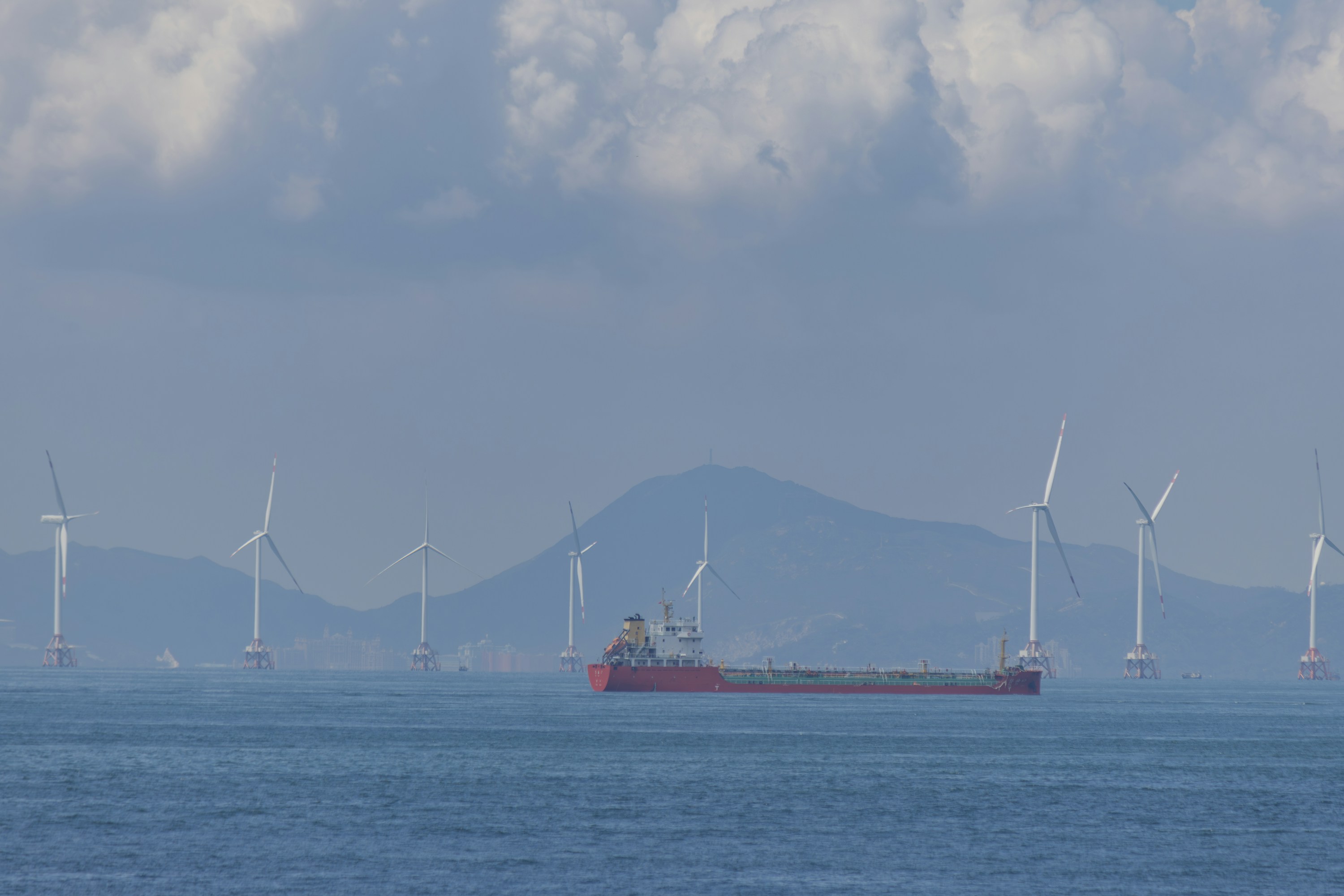
The promise of cheaper offshore energy has split in two. Brent crude closed at $100.52 a barrel on 3 September, according to the US Energy Information Administration—not the $70–$72 suggested by early-summer market commentary. Yet the EIA still expects Brent to average $69 in 2027 if Gulf production recovers and depleted inventories rebuild. In offshore wind, meanwhile, low power prices are not a future benefit. They are already one reason projects have become harder to finance.
The oil decline is a forecast, not the current market
EIA’s daily price snapshot, updated on 4 September, records Brent at $100.52 a barrel at the previous day’s close. That is the current starting point for the longer-term forecast—not a market already trading near $70. EIA Daily Prices
The latest EIA Short-Term Energy Outlook, completed on 6 August, forecast Brent at about $85 a barrel in the third quarter of 2026 and $69 in 2027. Its path lower depends on most Middle East production returning close to pre-conflict levels in early 2027. Even then, the agency expects roughly 600,000 barrels a day of disruption to remain through the end of next year. EIA Short-Term Energy Outlook
The International Energy Agency’s August report described the starting point for that forecast. Gulf supply had recovered in June and July but remained 8.3 million barrels a day below its pre-war level. Renewed hostilities and maritime disruption had pushed the IEA’s third-quarter supply estimate down by 1.7 million barrels a day from its previous report. Observed global stocks were 410 million barrels lower than at the start of the war. IEA Oil Market Report, August 2026
In other words, the expected price fall does not come from abundant oil today. It comes from the possibility that shut-in production returns faster than demand grows and allows inventories to rebuild. A forecast of restored supply is not evidence that the restoration has already happened.
The 3.2 million barrels-a-day surplus cited in the supplied research needs the same boundary. Rystad Energy published it as a conditional 2026 scenario—what could enter the market if OPEC+ unwound voluntary cuts. Events since then changed both production and demand. It is useful as an earlier risk case, not as a current measurement. Rystad Energy’s original conditional scenario
Cheap electricity can make wind projects harder to build
Offshore wind has almost the opposite problem. A wind farm does not receive the average electricity price printed in a market summary. It receives a volume-weighted “capture price” for the hours in which it actually generates. When many turbines produce at once, their extra supply can push those hourly prices down.
EIFO, Denmark’s export credit agency and promotional bank, compared wind and solar revenues in Denmark, Germany, Spain, the UK and Sweden’s SE2 bidding zone from 2019 to 2025. Across those markets, the average wind capture rate fell from 94% of the market average to 82%. Solar’s fell more sharply, from 98% to 68%. EIFO capture-price analysis
The European energy regulator ACER has recorded the same system tension: average day-ahead prices stabilised in 2025, but the gap between daily highs and lows grew to roughly five times its 2020 level as midday solar output deepened low-price periods and tight evening hours became more expensive. ACER 2026 market monitoring
That is good news for consumers only in particular hours and only before network, balancing, tax and retail costs. For a developer, it means every additional megawatt can earn less precisely when it produces most.
Denmark’s failed auction shows the full business case
Denmark tested that tension in the North Sea. In December 2024, no company bid for any of three sites offering a combined 3 GW of offshore-wind capacity. The original auction offered no subsidy, required an annual concession payment and made the state a 20% co-owner. Danish Energy Agency auction result
The Danish Energy Agency then held meetings with 17 companies and received nine written submissions. All said they could not build a satisfactory business case. The agency’s summary did not blame one low PPA bid or one turbine price. It identified a combination: sharply higher capital, operating and financing costs, expected low and uncertain electricity revenues in western Denmark, limited sales opportunities and uncertainty around future hydrogen demand. Most participants said no single factor was decisive. Official market-dialogue summary
The policy response makes the size of the gap visible. Denmark reopened tenders for at least 2.8 GW in November 2025 with a two-sided, capacity-based contract for difference. The state now guarantees a fixed price within the scheme, with a total payment cap of DKK 55.2 billion including VAT across the three areas. A market once expected to pay the state for offshore acreage is now being offered revenue support. Danish Energy Agency’s redesigned tender
Storage helps, but it does not make the two markets the same
Batteries, flexible demand and stronger interconnectors can move renewable electricity away from crowded hours or places. EIFO estimates that, under its assumptions, a two-hour battery with a 2:1 generation-to-storage capacity ratio would lift the five-market wind capture rate from 82% to 99%. It also warns that the value of flexibility can itself be competed down as more storage arrives. EIFO’s storage scenario and limits
That is different from the oil forecast. Oil becomes cheaper in the EIA case because physical production returns and inventories refill. Offshore wind earns less when its own weather-driven output depresses the price in the hours it can sell, while turbines, cables, ships and capital remain expensive.
The common word is “supply.” The economic story is not common at all. Oil may become cheaper next year if a disrupted market normalises. Offshore electricity is already cheap in some hours, and Denmark’s redesigned auction shows why that can make new generation more difficult—not less—to finance.
Sources
- EIA Daily Prices, September 4, 2026
- EIA Short-Term Energy Outlook, August 2026
- IEA Oil Market Report, August 2026
- Rystad Energy: 12 predictions for 2026
- Danish Energy Agency: North Sea auction received no bids
- Danish Energy Agency: market dialogue on 3 GW offshore wind
- Danish Energy Agency: redesigned 2.8 GW offshore-wind tender
- EIFO: green electricity prices under pressure
- ACER: 2026 monitoring of European electricity and gas markets