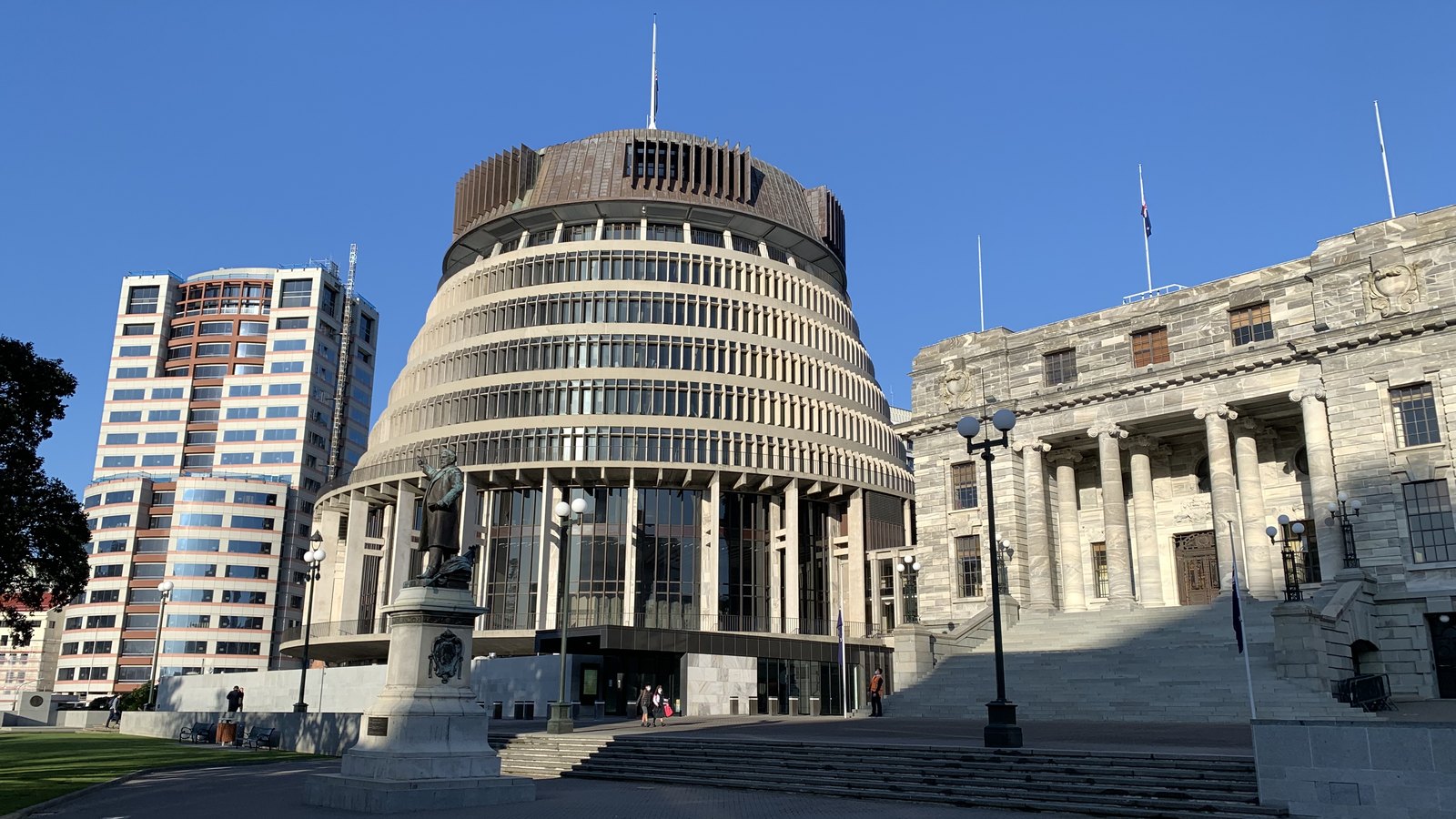
No. New Zealand is not in the European Union, has never been a member of its predecessor, the European Economic Community, and is not an EU candidate country. It is a sovereign country in the south-west Pacific. What New Zealand does have is an unusually broad partnership with the EU, including a free-trade agreement in force since May 1, 2024. Those agreements explain the confusion, but they do not give New Zealand the legal status or rights of an EU member.
The short answer in six parts
- Is New Zealand an EU member? No.
- Is New Zealand in Europe? No. It lies in the south-west Pacific.
- Was New Zealand ever in the EEC? No. The United Kingdom joined the EEC in 1973; New Zealand did not.
- Is New Zealand applying to join the EU? No. It is not listed among the EU’s candidate or potential candidate countries.
- Does New Zealand have a free-trade agreement with the EU? Yes. It entered into force on May 1, 2024.
- Does that agreement make New Zealand part of the EU single market? No. It removes or reduces specified trade barriers but does not confer membership.
The European Union currently has 27 member states. The EU’s own enlargement list identifies nine candidate countries and one potential candidate; New Zealand appears in neither group. It is treated by EU institutions as a partner and a “third country”, meaning a country outside the Union. European Union: key facts and member count European Union: enlargement and candidate countries
Why New Zealand cannot simply apply as a distant European partner
Article 49 of the Treaty on European Union says that any European state which respects the EU’s values may apply for membership. The familiar Copenhagen criteria then ask whether a candidate has stable democratic institutions, a functioning market economy and the capacity to implement EU law. Geography is therefore not an informal preference added after the economic tests: being a European state is the legal doorway to the process. EUR-Lex: joining the European Union under Article 49 European Union: membership criteria and accession process
New Zealand lies in the south-west Pacific Ocean, about 1,600 kilometres east of Australia. Its democratic institutions and close political ties with European countries do not change that geographic and legal fact. A country can share many EU standards or values without becoming a European state for Article 49 purposes. Stats NZ: New Zealand geography
This is also why comparisons with geographically unusual EU members can mislead. Cyprus is an EU member because it went through the accession process and all member states ratified its accession treaty. French territories in the Pacific have legal relationships with France and the EU that arise from sovereignty and EU treaty rules. New Zealand is an independent state with none of those constitutional links.
The practical conclusion is straightforward: the issue is not that New Zealand has failed an application or is waiting for approval. It is outside the class of European states that Article 49 allows to apply.
New Zealand was never a member of the EEC either
The European Economic Community was created by the Treaty of Rome in 1957 and later became part of the European Union created under the Maastricht Treaty. The six founding EEC members were Belgium, France, Germany, Italy, Luxembourg and the Netherlands. Denmark, Ireland and the United Kingdom joined in 1973. New Zealand is absent from every official enlargement round because it never joined. European Union: enlargement history from the EEC to the EU
The historical source of confusion is almost the opposite of membership. For much of the twentieth century, New Zealand depended heavily on Britain as an export market, particularly for agricultural goods. Britain’s decision to join the EEC threatened that preferential access because British trade policy would become part of the Community system.
The 1971 Luxembourg agreement gave New Zealand transitional access for butter, cheese and lamb when Britain entered the EEC in 1973. New Zealand’s official history records that all bilateral trade agreements between New Zealand and Britain then had to end. This was a negotiated cushion for a non-member country losing privileged access to a member country — not proof that New Zealand joined the Community. New Zealand History: Britain joins the EEC in 1973
That distinction matters because old references to “arrangements with the EEC” can sound like institutional membership when removed from their context. New Zealand negotiated with the EEC precisely because it stood outside it.
What the 2024 EU–New Zealand trade agreement actually does
The EU–New Zealand Free Trade Agreement was signed on July 9, 2023 and entered into force on May 1, 2024. New Zealand’s Ministry of Foreign Affairs and Trade says 91 percent of its existing goods trade entered the EU tariff-free from the first day, rising to 97 percent after the scheduled phase-ins. The agreement also covers services, investment, public procurement, geographical indications, Māori trade and cooperation on sustainable development. New Zealand MFAT: EU–New Zealand FTA New Zealand MFAT: FTA overview and tariff phase-ins
The European Commission recorded €8.1 billion in bilateral goods trade in 2023 and described the EU as New Zealand’s third-largest trading partner at the time. Its impact assessment forecast that the agreement could increase bilateral trade by up to 30 percent and save EU companies about €140 million a year in duties. Those are modelled expectations, not membership payments or guarantees of a particular commercial result. European Commission: EU–New Zealand trade agreement
A free-trade agreement is still different from joining the EU customs union or single market. Goods can qualify for lower tariffs only when they satisfy the agreement’s rules of origin and other conditions. Importers still make customs declarations, regulated products still have to meet the destination market’s rules, and quotas remain for some sensitive agricultural products.
The EU single market guarantees free movement of goods, capital, services and people across its participating countries. It includes the 27 EU states plus Norway, Iceland and Liechtenstein through the European Economic Area. New Zealand is not part of that arrangement. Its FTA creates negotiated market access in defined areas rather than the broad treaty rights of the single market. European Commission: the European single market
The partnership reaches beyond trade
New Zealand and the EU signed a Partnership Agreement on Relations and Cooperation on October 5, 2016. It provides a framework for political dialogue and cooperation in areas including foreign policy, security, development, research, education, climate and justice. That agreement is broader than a trade deal, but it is still an agreement between separate parties. European External Action Service: EU and New Zealand sign PARC
Research offers a useful example of how close cooperation can resemble membership in one narrow programme. New Zealand became associated with Pillar II of Horizon Europe in July 2023. Its researchers and organisations can participate in collaborative projects on conditions similar to those for EU entities, and New Zealand contributes financially to that part of the programme. Association does not make the country an EU member; it is a programme-specific status created by an agreement. European Commission: New Zealand association to Horizon Europe
The same pattern runs through the relationship: shared interests produce targeted legal bridges. Each bridge has its own scope. None converts New Zealand law into EU membership, gives New Zealand a vote in EU institutions or adds the country to the Union’s treaties.
What this means for people and businesses
A New Zealand passport is not an EU passport. New Zealand citizens do not acquire EU citizenship, an automatic right to live or work throughout the Union, or a vote in European Parliament elections merely because their country has an FTA. Travel, residence and employment remain subject to the rules that apply to non-EU nationals and can vary by destination and purpose.
For a business, “tariff-free” is not shorthand for friction-free. The exporter needs to classify the product, establish origin, keep the required evidence and comply with food, safety, labelling or other market rules. A tariff preference can reduce one cost while leaving customs administration and regulatory compliance intact.
For researchers, Horizon Europe association can open specific collaborative funding routes. It does not move every New Zealand institution into every EU programme. Applicants still need to check the call, pillar and eligibility conditions rather than treating “associated country” as a universal pass.
These differences are not semantic. They determine who makes the rules, who can vote on them, which courts have authority and which rights individuals can claim directly. New Zealand cooperates closely with the EU while retaining its own Parliament, trade policy and citizenship system.
Why the wrong answer keeps circulating
The misconception survives because several true statements are easily combined into a false one. New Zealand has deep British and European historical links. It negotiated special access when Britain joined the EEC. It now has a modern FTA, a political partnership agreement and access to part of the EU’s research programme. None of those facts is membership.
The old country label “European” can cause a second kind of confusion. New Zealand institutions, languages and a large share of its settler history have European roots, but cultural ancestry is not continental geography or treaty status. New Zealand is also a Pacific nation shaped by Māori as tangata whenua and by wider Pacific relationships. Calling it a European country collapses those different meanings.
A reliable check is to ask what legal instrument is being discussed. An accession treaty creates EU membership. A free-trade agreement changes specified trade rules. An association agreement opens a programme or field of cooperation. Similar language about “partnership” or “access” does not make those instruments interchangeable.
The bottom line
New Zealand is not in Europe, not part of the EU and not a former member of the EEC. It is a Pacific country with a close, formal relationship with the European Union.
That relationship became more economically significant when the EU–New Zealand FTA entered into force in 2024, and it also includes political and research cooperation. The accurate description is therefore neither “EU member” nor “unconnected outsider”. New Zealand is a well-connected partner whose access comes from negotiated agreements, not membership.
Sources
- European Union enlargement and membership process
- EUR-Lex summary of Article 49 TEU
- New Zealand History: Britain joins the EEC
- New Zealand MFAT: EU–New Zealand Free Trade Agreement
- European Commission: EU–New Zealand trade agreement
- European Commission: New Zealand in Horizon Europe
- Source video retained from the supplied article
- Lead photograph by Tom Ackroyd, Wikimedia Commons
- Image licence: Creative Commons Attribution-ShareAlike 4.0
