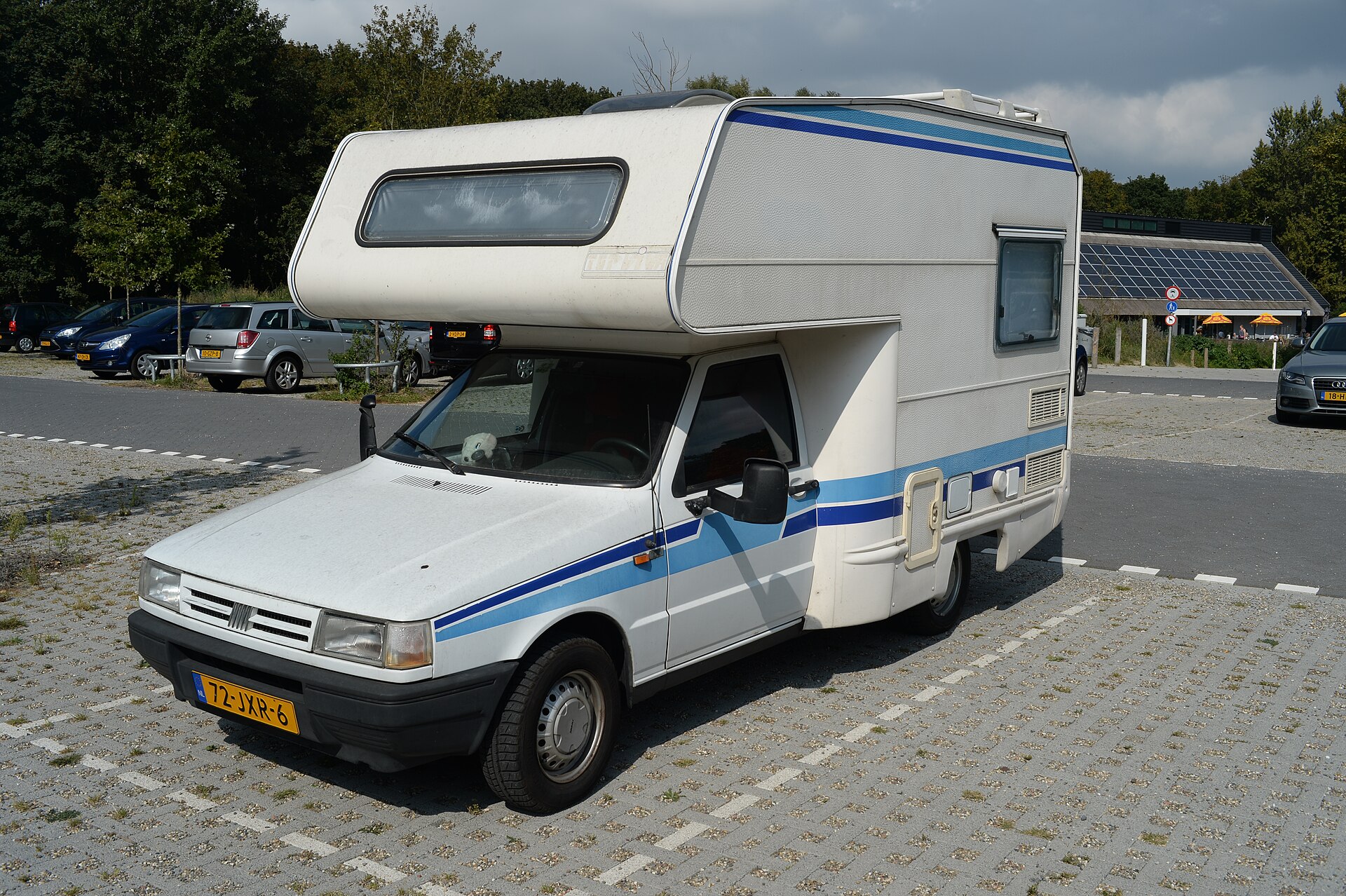
The safe place for a motorhome gas bottle is not whichever cupboard has room. It is the locker the vehicle was designed and approved to use: isolated from the habitation area, ventilated to the outside, able to drain leaked LPG at low level, and fitted to hold the cylinder upright while the vehicle moves. That arrangement matters because LPG vapour is heavier than air. A leak can collect in a low, enclosed space and remain there until a spark or flame provides ignition.
Begin with the vehicle, not a generic cylinder rule
European leisure-vehicle LPG installations are covered by EN 1949. The current British adoption is BS EN 1949:2021, which the British Standards Institution describes as the specification for LPG systems used for habitation in leisure accommodation vehicles and other vehicles. The standard is an installation framework, not a substitute for the motorhome handbook or national inspection rules. BSI: BS EN 1949:2021
That distinction prevents a common error. Advice about carrying a loose barbecue cylinder in a car, storing bottles at home and operating a permanently installed motorhome system answers three different questions. A cylinder connected to the habitation system should occupy the vehicle’s approved cylinder compartment. A spare must fit there safely too, or travel under the rules that apply to carried cylinders in the relevant country. An empty cylinder is not risk-free: it can still contain flammable vapour.
Do not convert a bed box, kitchen cupboard, roof box or rear carrier into gas storage because it appears convenient. The correct locker is part of a designed system that considers access, ventilation, separation from the living space and restraint during braking or collision. If the original compartment has been altered, punctured, lined over or used to store equipment that blocks its vents, its presence alone does not establish that the installation remains safe.
The locker has four jobs
First, it separates a possible release from the place where people cook and sleep. Second, it allows vapour to escape outdoors rather than accumulate. Third, it keeps cylinders upright and restrained. Fourth, it protects valves, hoses and regulators from luggage, tools and other moving objects. Those functions are more important than whether the locker sits at the side or rear of the vehicle.
The physical reason for low-level ventilation is simple: LPG vapour can collect at the lowest point. Health and Safety Executive guidance for holiday accommodation warns that inadequate ventilation can allow leaked LPG to build up and says low-level openings must remain clear. That publication concerns park homes rather than touring motorhomes, but the pooling mechanism is the same and explains why a drop vent must never be covered by a mat, storage tray or DIY insulation. HSE: ventilation around LPG-supplied holiday accommodation
A locker is not useful extra storage. Levelling blocks, electrical leads, cleaning products and toolboxes can obstruct ventilation, damage a hose or make the shut-off valve hard to reach. Keep only equipment the manufacturer permits in that compartment. Close and latch the door before travel, then confirm that exterior vents are free of mud, insects, snow and campsite debris. Do not enlarge, reroute or screen a vent without competent advice because its free area and position are part of the design.
Keep every cylinder upright and immobile
Public fire-service guidance consistently says LPG cylinders should be installed upright, adequately ventilated and secured. Cambridgeshire Fire and Rescue Service also advises turning off the cylinder when appropriate, changing bottles carefully and treating a suspected leak as a reason to stop using switches and seek specialist help. Cambridgeshire Fire and Rescue Service: LPG cylinders
Upright storage keeps the valve in the vapour space for a cylinder designed to supply vapour. Liquid LPG reaching equipment intended for vapour can create an uncontrolled flow. The cylinder should sit on the intended base and be held by the vehicle’s strap, clamp or bracket around a sound part of the bottle. A bungee cord, luggage wedged against the cylinder or the locker door itself is not a restraint system.
Before departure, push the cylinder gently without disturbing the connection. It should not tip, rotate freely or strike the regulator. Check that the restraint is not cut, corroded or routed across a valve. Look for deep rust, dents, heat damage or an unreadable test mark, and follow the supplier’s return or exchange process when the bottle is questionable. Never paint over markings, repair a valve, transfer gas between bottles or test a leak with a flame.
Cylinder, regulator and connector must be a matched system
Propane and butane are both LPG, but cylinders, connectors, supply pressures and low-temperature performance are not interchangeable by assumption. A bottle that physically fits the locker can still be wrong for the installed regulator. Country-specific adapters add another failure point and can tempt travellers to assemble combinations the appliance or vehicle maker never approved.
Read the cylinder label, regulator marking and vehicle handbook together. The handbook should identify permitted gas type, capacity, connection and operating procedure. When travelling across borders, plan refills or exchanges before the bottle is empty. Do not force a connector, use tape to make an LPG fitting seal, or improvise a reducer because a campsite shop sells both parts. A qualified leisure-vehicle gas technician should resolve incompatibility.
Hoses have service limits and can deteriorate without an obvious leak. Inspect only what the handbook expects an owner to inspect: kinks, abrasion, cracking, loose restraint and obvious contamination. A correctly specified leak-detection fluid may reveal bubbles at an accessible joint when the manufacturer’s procedure permits it, but dismantling a joint to investigate moves beyond an owner check. If the system fails a test, close the supply and leave it closed until repaired and tested.
Travel changes the rules
Many owners assume that an appliance which works on a pitch may remain on while driving. That is not a safe default. The cylinder valve should normally be closed for travel unless the vehicle has a system specifically designed for operation in motion, the appliance and regulator are approved for it, and the countries on the route permit it. Such systems may use crash-sensitive shut-off protection; an ordinary regulator does not become travel-safe because the refrigerator has a gas setting.
Ferries, tunnels, garages and campsites can impose their own requirements. Operators may limit cylinder numbers, require valves to be closed or prohibit LPG in particular spaces. Check before arrival rather than at the barrier. The cylinder remains part of the vehicle’s payload, so adding a large spare affects mass and axle loading as well as locker space. Never defeat a restraint to squeeze in an extra bottle.
The HSE’s transport guidance states that LPG containers carried as loads must be upright and individually secured against movement. Leisure-vehicle installations have their own rules, but the transport principle reinforces why a loose spare in the habitation area is a poor workaround. HSE: carriage of gas cylinders in vehicles
A smell of gas is an emergency sequence
LPG is odorised so a leak can be noticed. If you smell it, hear escaping gas or a detector alarms, do not search for the source while people remain inside. Use this order:
- Do not light a flame, smoke, start the engine or operate an electrical switch. A switch can make a spark.
- If the cylinder valve is immediately reachable without entering a strong gas cloud, close it. Do not take a risk to reach it.
- Open doors and windows manually when that can be done safely, then get everyone out and away from the vehicle.
- Call emergency services for fire, a strong continuing release or any doubt about immediate danger. Tell the campsite operator when relevant.
- Do not use the LPG system again until a competent technician has found the cause, repaired it and tested the installation.
Cheshire Fire and Rescue Service gives the same core response: turn off appliances and the main valve if safe, open doors and windows, avoid smoking and electrical switches, and wait for professional clearance. Ventilation is an emergency measure, not proof that the leak has been fixed. Cheshire Fire and Rescue Service: caravan safety
The pre-trip inspection that earns its place
A useful check takes minutes: confirm the correct bottle and connection; close or open the valve according to the handbook; secure each cylinder upright; keep the shut-off accessible; inspect visible hose and regulator condition; clear low-level ventilation; latch the locker; and test the LPG alarm, carbon-monoxide alarm and smoke alarm according to their instructions. An LPG alarm detects fuel gas. A carbon-monoxide alarm detects a poisonous combustion product. One does not replace the other.
Arrange a professional inspection at the interval required by the vehicle, national scheme, insurer or manufacturer, and after buying a used motorhome or modifying any gas appliance. Ask the technician to document the pressure and soundness checks rather than treating a flame that lights as evidence that the system is safe. Keep the report with the vehicle records so a later owner can see what was tested.
Safe storage is therefore not a clever place to hide a bottle. It is a chain of designed controls: an approved locker, clear outside ventilation, upright restraint, compatible components, a travel procedure and a rehearsed response to a leak. If any link is uncertain, close the cylinder and resolve it before the trip continues.
.jpg)