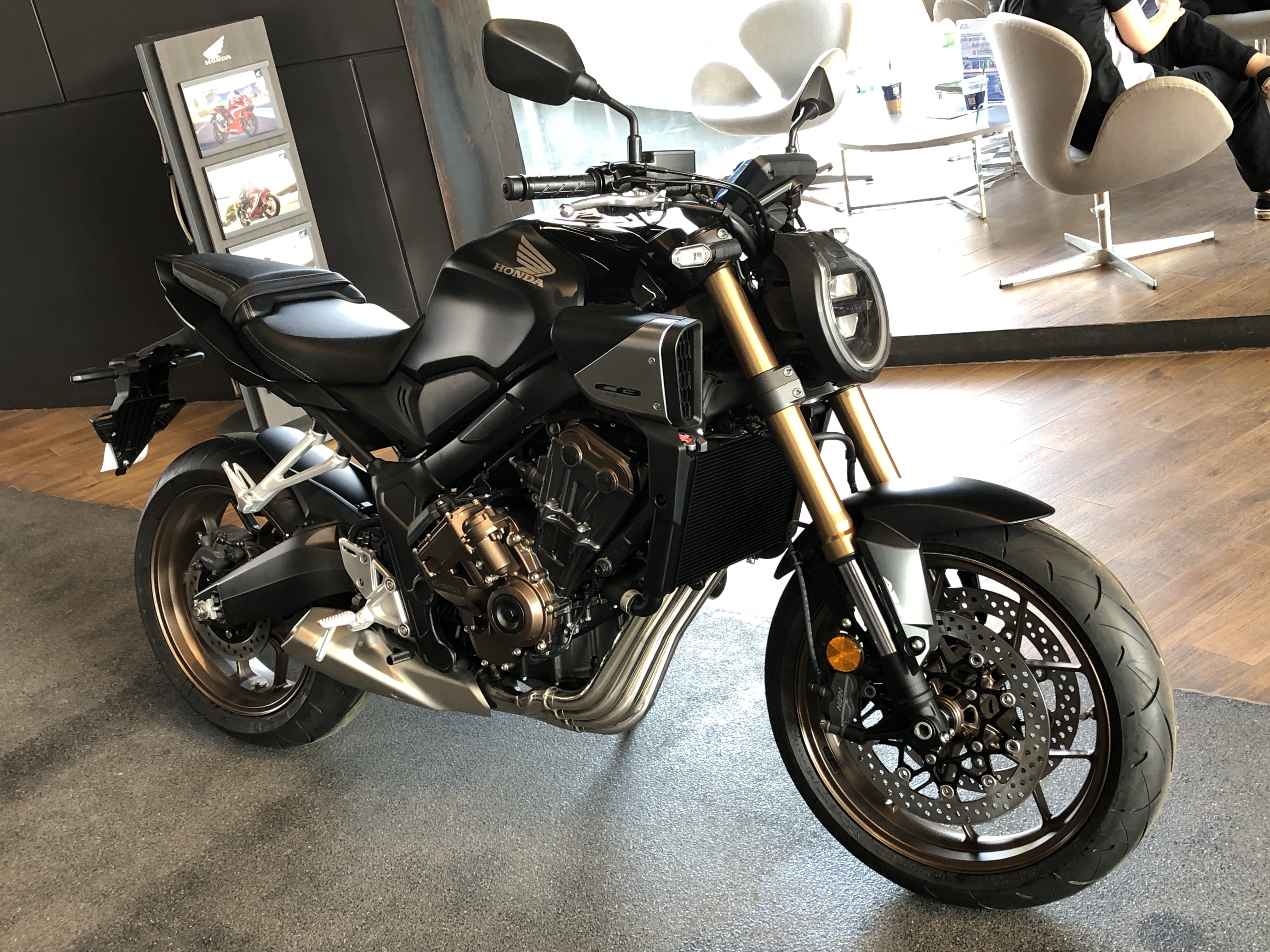
Honda E-Clutch does one job that normally belongs to the rider: it engages and disengages the clutch. It does not choose gears. You still select every gear with your left foot, and the motorcycle still uses a conventional manual gearbox. That distinction is the quickest way to understand the system. E-Clutch is not Honda's Dual Clutch Transmission, and it is not a conventional automatic. It is a manual motorcycle with electronically controlled clutch operation and a clutch lever that remains available whenever you want it. The result can remove repeated lever work from traffic, starts, stops and gear changes without removing the foot-shift pattern. That may be useful, but it also creates a new set of habits. The rider still has to select the right gear, understand when a manual override is active and read the exact owner's manual for the model being ridden.
The one distinction that clears up most confusion
On a normal manual motorcycle, the rider coordinates three separate inputs: throttle, clutch lever and gear pedal. A quickshifter may reduce the work during some gear changes, but the rider still uses the clutch when moving away and stopping. Honda E-Clutch goes further by operating the clutch during starts, shifts and stops.
Gear selection remains manual. Honda says this explicitly in its technical explanation of E-Clutch: the system automates clutch operation, while the rider remains responsible for the gear-shift pedal. If you leave a traffic light in first, you must still choose second, third and every gear after that. Honda: E-Clutch technology
Honda's DCT is fundamentally different. DCT uses two clutches and can choose gears itself. Depending on the motorcycle and mode, the rider can let the transmission shift automatically or request shifts with hand controls. E-Clutch never turns the gearbox into that kind of automatic transmission.
This matters when comparing motorcycles, discussing licensing rules or booking a test ride. Do not assume that a motorcycle with E-Clutch will be classified as an automatic in every jurisdiction. Local licence and test rules vary, so ask the relevant authority about the exact model rather than relying on the marketing name.
What the hardware actually does
The original E-Clutch unit uses two compact electric motors, gears and a motor control unit mounted at the clutch. Honda's engine controller and the clutch controller use signals that include engine speed, throttle position, selected gear, pressure on the shift pedal and front and rear wheel speed. The system uses that information to decide when and how quickly to engage or disengage the clutch.
The clutch and the multi-speed gearbox remain mechanically similar to those in the conventional manual motorcycle. The electronic equipment operates the clutch through a split control arrangement that also leaves the hand lever connected. Pulling the lever can therefore override automatic clutch control without waiting for a menu change.
That manual path is not decorative. It lets a rider feather the clutch during a tight manoeuvre, control a launch or simply use familiar technique. The system can also be switched off so the motorcycle behaves like a conventional manual. The details of that setting, including whether it persists after the ignition is cycled, are model-specific.
The compact approach is part of the appeal. Honda says the current system adds about 2 kilograms across its 500, 650 and 750 E-Clutch ranges in the UK. Those families do not all have identical control features. The 750 models combine E-Clutch with throttle-by-wire, for example, enabling coordinated downshift blipping and additional control that should not be assumed on every earlier or smaller model. Honda UK: current E-Clutch range and functions
What starting, shifting and stopping involve
The operating sequence is still recognisably manual, but the left hand can stay off the lever.
For the CB650R and CBR650R, Honda's official quick-start guide says E-Clutch activates when the ignition is switched on in neutral. The rider checks the dashboard indicator, selects first with the gear pedal and opens the throttle gradually. The controller then brings the clutch in. Honda: CB650R and CBR650R E-Clutch quick-start guide
Once moving, the rider requests each upshift or downshift with the gear pedal. Honda says those shifts can be made with the throttle open or closed, although its guide recommends keeping the throttle open for upshifts on those 650 models. The controller coordinates clutch movement with engine control to complete the change.
When stopping, the rider can use the brakes without pulling the clutch lever. As engine speed falls, the system disengages the clutch to prevent the engine from stalling. That convenience does not select first gear. If you stop in second or higher, you must shift down before moving away again.
Honda warns that starting in too high a gear causes faster clutch wear and can make the E-Clutch system switch off. An independent RevZilla first ride on the 2024 CB650R found that the motorcycle could remain running after stopping in a high gear, but acceleration was badly compromised. Stall resistance should not be confused with correct gear selection. RevZilla: 2024 Honda CB650R E-Clutch first ride
There is another easy detail to miss when parking. If the ignition is turned off while the motorcycle is in gear, E-Clutch is no longer active and the clutch engages. To roll the motorcycle, select neutral or pull the clutch lever. A rider who expects the powered system to keep the clutch open after shutdown may otherwise think the bike has unexpectedly locked.
E-Clutch versus a manual, a quickshifter and DCT
These systems overlap in what the rider feels, but they do not remove the same tasks.
| System | Who operates the clutch? | Who chooses the gear? | Clutch needed to start and stop? |
|---|---|---|---|
| Conventional manual | Rider | Rider, with foot pedal | Yes |
| Manual with quickshifter | Rider, except during supported shifts | Rider, with foot pedal | Usually yes |
| Honda E-Clutch | Electronic control by default, rider can override | Rider, with foot pedal | No, while E-Clutch is active |
| Honda DCT | Transmission control | Transmission or rider through hand controls | No clutch lever |
A quickshifter normally helps by interrupting or matching engine torque when the rider presses the shift pedal. Its supported directions and operating range depend on the model. It generally does not manage the clutch through every start and stop.
E-Clutch manages clutch engagement across those low-speed events as well as shifts, but it still waits for the rider's gear choice. DCT adds automated gear selection and is therefore the closer match for a rider who wants the motorcycle to decide when to shift.
Calling all three systems "automatic" hides the decision that actually matters: whether you want relief from clutch-lever work, relief from gear selection, or only faster shifts once moving.
Manual override is useful, but it changes responsibility
Pulling the clutch lever while E-Clutch is active temporarily hands clutch control back to the rider. Honda's 650 quick-start guide says automatic control returns after the lever is released and a short interval has passed while riding. At a stop, it instructs the rider to select neutral while holding the lever so the system can reactivate.
That interval is not a moment to assume the electronics will rescue poor clutch control. In RevZilla's test of the 2024 CB650R, automatic control returned after about one second following a high-rpm override, but took about five seconds at low rpm or a stop. During that period, a stall was still possible. Those timings describe that tested model and operating state, not a promise for every E-Clutch motorcycle.
The override can be valuable at walking speed. An automated take-up calibrated for a clean departure may feel more direct than a skilled rider's deliberate clutch slip. A hand on the lever can give familiar fine control in a U-turn, on an awkward camber or during a precise parking manoeuvre. The correct approach should be learned in a clear practice area and checked against the model's manual, not discovered for the first time in traffic.
What independent testing adds to Honda's description
Manufacturer material explains what a system is designed to do. A road or track test can show where a rider notices the calibration.
On the first-generation CB650R, RevZilla described initial engagement as immediate and more direct than a smooth manual launch, though not abrupt. The tester also found the ability to override the system useful for a gentler departure and for more specialised control. At speed, the same article found the electronically coordinated changes quick and composed.
Those observations should not be universalised. Honda has expanded E-Clutch from the first CB650R and CBR650R to additional 500 and 750 families in the UK, and the newer throttle-by-wire models add functions the original cable-throttle 650s did not have. Software settings, engine character and model year can change the feel even when the E-Clutch label is the same.
The useful conclusion is narrower: the system reduces a physical task, but it does not make rider technique irrelevant. A test ride should include low-speed control and ordinary traffic behaviour, not only smooth upshifts on an open road.
Who E-Clutch may suit
E-Clutch has a clear case for riders who enjoy selecting gears but dislike constant lever work. Stop-and-go commuting is the obvious example. It may also appeal to a rider with limited hand endurance, provided the person's needs have been discussed with a qualified instructor, clinician where appropriate and the dealer handling the exact motorcycle.
It can also reduce one source of anxiety for a newer rider by controlling clutch take-up and preventing many ordinary stalls. That is assistance, not a substitute for training. The rider still controls a heavy, powerful vehicle, chooses gears, balances at low speed and must understand what happens when the electronics are off or manually overridden.
A conventional manual may be the better choice for someone who values mechanical simplicity, wants uninterrupted practice with clutch technique or simply prefers direct control. A quickshifter may be enough for a rider whose only concern is rapid changes once moving. DCT is the more relevant Honda option for someone who wants the motorcycle to handle gear selection as well as clutch operation.
There is no single winner. E-Clutch occupies a deliberate middle ground: less clutch work without surrendering the foot-operated gearbox.
A useful E-Clutch test-ride checklist
Do not judge the system after one fast upshift. Ask the dealer for enough time and a suitable area to test the parts that change everyday ownership.
- Confirm the dashboard indication for active and inactive E-Clutch.
- Pull away gently several times and note how predictably the clutch engages.
- Upshift and downshift at ordinary road pace, not only under strong acceleration.
- Come to a complete stop, check the selected gear and move away correctly in first.
- Try a tight turn and walking-speed manoeuvre in a safe area, including a deliberate manual override.
- Learn how and when automatic control returns after using the lever.
- Switch the system off and confirm how the motorcycle behaves as a normal manual.
- Turn the ignition off while safely stationary and understand how to move the bike if it is left in gear.
- Ask which features belong to that exact model and model year, especially throttle-by-wire functions and shift settings.
- Read the owner's manual before treating any demonstration as a complete operating guide.
The test should answer a practical question: does the motorcycle make your real riding easier while remaining predictable when you intervene?
The bottom line
Honda E-Clutch is best understood as an electronically operated clutch attached to a manual motorcycle. It can start, stop and change gears without routine use of the lever, but it never chooses the gear for you. The foot pedal, correct gear selection and rider judgement remain central.
Its value is not that it turns a motorcycle into an automatic. It offers a narrower trade: fewer repetitive clutch inputs while preserving manual gear choice and manual override. For some riders that will be the useful middle ground. For others, a conventional manual, a quickshifter or DCT will better match the work they want to keep.
Model availability and functions were checked on October 3, 2026. Honda changes specifications by market and model year, so confirm the current local specification and owner documentation for the motorcycle you are considering.
