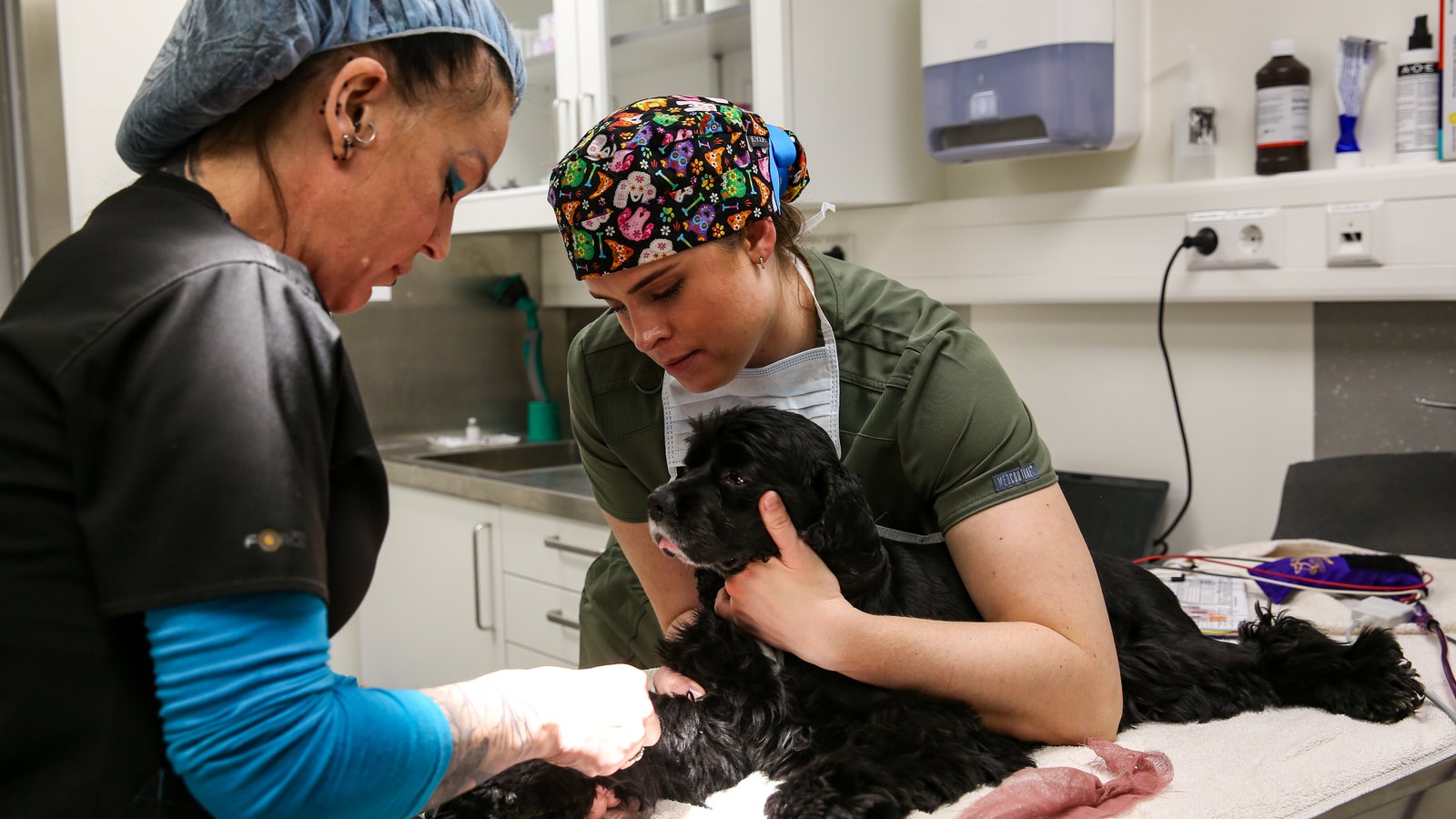
Veterinary technicians are sometimes drug tested, but the job title does not trigger one nationwide rule. In the United States, most private veterinary practices are not federally required to test every technician. A clinic, university, research facility or government employer may still make testing part of hiring or employment, subject to state and local law. The reliable answer is therefore found in the written policy for the specific job — not in a general claim about the profession.
The short answer depends on the workplace
The federal government does not require most private employers to operate any drug-free workplace programme. SAMHSA identifies narrower federal obligations for categories such as certain federal contractors and grantees, federal employees, and safety- or security-sensitive regulated industries. An ordinary privately owned veterinary clinic does not become federally mandated to test all technicians merely because it treats animals or stores medication. SAMHSA: federal workplace drug-testing laws
That does not prevent a lawful employer policy. A practice may require a test before employment, after a workplace incident, when documented behaviour creates reasonable suspicion, at random, or as part of a return-to-duty agreement. Which of those events is permitted, and what notice or procedure is required, can change by state, locality, public- or private-sector status and any collective-bargaining agreement.
SAMHSA’s state-law overview makes the variation explicit: some jurisdictions allow broad private-sector testing, while others restrict who can be tested, how testing is conducted and what consequences may follow. Marijuana protections and workers’ compensation rules add another layer. A policy that is lawful in one state should not be copied into another without review. SAMHSA: state and local workplace drug-testing laws
If a job advertisement says “drug-free workplace”, ask what the phrase means operationally. It may describe a conduct rule without routine testing, a pre-employment screen after a conditional offer, or a programme with several testing triggers. The slogan alone does not disclose the procedure.
Veterinary work explains the safety concern, not the legal rule
Veterinary technicians restrain animals, collect blood, run laboratory tests, prepare instruments, administer prescribed medication, assist with anaesthesia and monitor patients. The Bureau of Labor Statistics also reports that the occupation has a high rate of injuries and illnesses, including bites, scratches and kicks. Impairment can therefore affect animals, colleagues and the technician, especially during dosing, anaesthesia, imaging or physical restraint. US Bureau of Labor Statistics: veterinary technologists and technicians
Those risks can support a clinic’s decision to create a fitness-for-duty and substance-use policy. They do not establish that a laboratory result, by itself, proves what happened during a shift. SAMHSA states that the federal testing guidelines do not determine fitness for duty. A drug test can identify a targeted substance or metabolite under defined conditions; supervisors still need a separate process for immediate safety observations and work restrictions. SAMHSA: federal workplace drug-testing FAQ
Controlled-substance access is another reason veterinary employers scrutinise hiring and internal controls. Clinics may hold opioids, sedatives and other controlled medication. Secure storage, inventory reconciliation, access limits, discrepancy reporting and separation of duties address diversion more directly than assuming a negative hiring test prevents future theft or misuse.
DEA employee-screening rules are often overgeneralised online. DEA has clarified that 21 CFR 1301.90 applies to prospective employees at registered non-practitioner locations where controlled substances are handled. That clarification does not turn the provision into a blanket federal drug-test mandate for every employee of a veterinary practitioner. Employers still need to identify which DEA and state rules actually apply to their registration and workplace. DEA: clarification of 21 CFR 1301.90 employee screening
Credentialing and employment are separate checks
The national Veterinary Technician National Examination is a competency exam, not a workplace drug screen. AAVSB explains that it administers the VTNE but does not license, certify or register technicians. State and provincial law determines credential requirements, and regulation varies widely between jurisdictions. AAVSB: 2026 VTNE candidate handbook
A person can therefore face three different sets of questions: what is needed to sit the VTNE, what the state board requires for a credential, and what an individual employer requires for a job. A background check, a professional-conduct question and a laboratory drug test are not interchangeable. Passing one does not answer the others.
The supplied legacy article said some states require drug testing for veterinary-professional licensing but did not identify a statute or board rule. That claim should not be carried forward as a general fact. Applicants should use the current website of the board that regulates veterinary technicians in the state where they intend to work and then read the prospective employer’s policy separately.
This distinction also matters when moving. A technician’s credential may transfer only through a new jurisdiction’s process, while the new employer can have a different testing policy from the previous clinic. A national exam result does not freeze either set of rules.
When a test may occur
A written policy should identify the trigger rather than simply reserve unlimited discretion. Common programme designs include:
- Pre-employment testing, often after a conditional offer and before the first shift.
- Reasonable-suspicion testing based on documented, contemporaneous observations rather than rumour or a protected medical condition.
- Post-accident testing when the event and the employee’s conduct fit the policy and state law.
- Random testing where the jurisdiction, employment setting and policy permit it, using a genuinely neutral selection method.
- Return-to-duty or follow-up testing under an agreed rehabilitation, disciplinary or safety process.
SAMHSA advises employers to define who is tested, when, which substances are included, who pays, how accuracy is protected and what rights follow a positive result. The same guidance calls for confidential records and a clear relationship between testing, treatment support and discipline. Those are useful questions even when a private clinic is not using the federal programme. SAMHSA: workplace drug-testing resources
What a drug test can — and cannot — establish
Drug tests differ by specimen, panel and detection window. SAMHSA lists urine, oral fluid, blood, hair, sweat and other specimen types, while the federal civilian programme uses authorised urine and oral-fluid methods. Federal panels cover specified categories, including amphetamines, cocaine, marijuana, certain opioids and PCP. A private employer’s panel may differ, so a technician should not infer the substances or time window from the word “test”. SAMHSA: specimen types and federal testing panels
A positive screening result is not the same as a final verified result. Good programmes use confirmatory laboratory methods and a medical review process before reporting a result as positive. The federal system also uses split specimens and permits a second certified laboratory to test the retained specimen after an MRO-verified positive. Private-sector rights depend on the applicable law and policy, but applicants can ask whether comparable safeguards exist.
A result also does not measure how well someone performed a procedure at a particular time. Detection windows can extend beyond immediate effects, while some impairing substances may not be on a given panel. A clinic needs observable safety rules and competent incident review rather than treating testing as a complete impairment programme.
Attempts to dilute or “detox” a sample are not a safe or reliable solution. Federal urine programmes include specimen-validity testing for abnormal characteristics and adulterants. Excessive water intake can itself be dangerous, and commercial products do not create a legal right to defeat an employer’s process. The responsible response is to understand the policy and use its review or challenge procedure.
Prescription medication and disability questions need care
The Equal Employment Opportunity Commission states that a test for current illegal drug use is not a medical examination under the Americans with Disabilities Act. The ADA therefore does not itself prohibit such testing. It also does not protect current illegal drug use when an employment action is based on that use. However, people with a history of addiction who are no longer engaging in illegal use, or who are in rehabilitation, may have protections against discrimination. EEOC: ADA questions and answers on illegal-drug testing
Legal prescription use is different. EEOC guidance says employers generally may not ask every employee to list all prescription medications. A narrower inquiry may be lawful when it is job-related and consistent with business necessity, including some safety-sensitive circumstances. Medical information must be handled with the confidentiality the law requires. EEOC: disability-related inquiries and prescription medication
An applicant should not stop prescribed medication merely to prepare for a test. If a laboratory or medical review officer asks for documentation, provide it through the designated confidential channel rather than discussing diagnoses broadly with a hiring manager. The review process is meant to distinguish an authorised medical explanation from illicit use without giving supervisors unnecessary medical detail.
Cannabis creates additional complexity because federal and state treatment can differ. State or local law may restrict adverse action for lawful off-duty use or for certain test results, while other jurisdictions allow broader policies. A veterinary employer and applicant need the current rule where the work occurs; neither a state’s legalisation nor federal prohibition supplies a universal employment answer.
Seven questions to ask before accepting the job
- Is testing required before employment, and does it occur only after a conditional offer?
- Which later events can trigger testing: random selection, reasonable suspicion, an accident, return to duty or something else?
- Which specimen and panel are used, who pays, and which laboratory performs the analysis?
- Does a non-negative screen receive confirmatory testing and review by a qualified medical review officer before the employer acts?
- How can an applicant document a lawful prescription, request a retest or challenge an error without disclosing unnecessary medical information to management?
- What are the consequences of refusal, a verified positive or an inconclusive result, and are treatment or return-to-work options available?
- Where is the policy in writing, and which state or local rule does the employer rely on?
Ask the same questions when a policy changes after hiring. A consistent written process protects the clinic as well as the employee: it reduces improvisation, tells supervisors what observations to document and makes it harder to single out one person unfairly.
If a result is unexpected
First, ask whether the result is an initial screen or a confirmed, reviewed result. Follow the written deadline for contacting the medical review officer, supplying prescription documentation or requesting analysis of a retained specimen. Keep copies of the policy, collection paperwork and notices you receive.
Second, separate the laboratory dispute from any immediate patient-safety decision. An employer may temporarily remove someone from medication handling or clinical duties while facts are reviewed, but a safety step does not answer whether the test was accurate or what final employment consequence is lawful.
Third, use the correct outside help. The testing provider or MRO handles analytical and medication questions. The state labour agency or an employment lawyer can explain local rights. A union representative should be involved where a collective agreement applies. A healthcare professional or confidential treatment service is the appropriate route when substance use is creating harm or risk.
The legacy article offered hydration and “detox” advice. That framing is removed here because it can encourage sample manipulation, obscure medical risk and bypass the more important questions of accuracy, lawful medication and safe practice.
The bottom line
Some vet techs are drug tested and others are not. The decisive facts are the employer, work setting, testing trigger, written policy and law in the jurisdiction — not the occupational title alone.
For applicants, the safest approach is simple: check the state credentialing rule, obtain the employer’s policy, ask how confirmation and medical review work, and never assume that a drug-free-workplace notice describes a universal federal mandate. For employers, testing should be one carefully designed part of a broader safety, controlled-substance and employee-support system, not a substitute for it.
Sources
- SAMHSA federal workplace drug-testing laws
- SAMHSA state and local workplace rules
- SAMHSA workplace drug-testing resources
- EEOC ADA questions and answers
- EEOC disability-related inquiry guidance
- AAVSB 2026 VTNE handbook
- US Bureau of Labor Statistics occupational profile
- Lead photograph by Pfc. Jaimee Perez, US Army / Wikimedia Commons
.jpg)